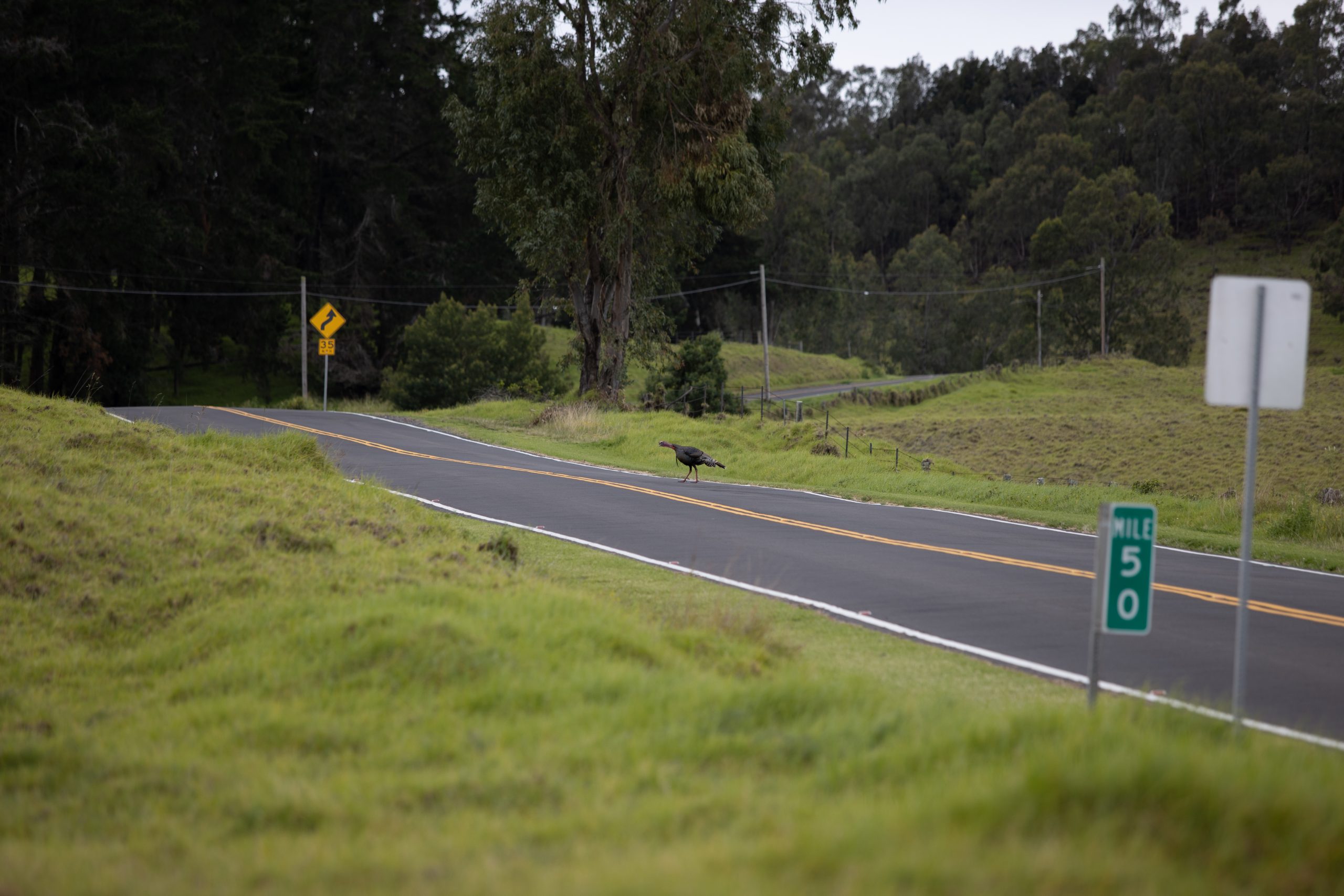
The Unique History of Hawaii’s Wild Turkey
When most people think of Hawaii, images of volcanic landscapes, stunning beaches and lush rainforests come to mind. But what about wild turkeys? It might surprise some to learn that Hawaii has a thriving population of Rio Grande wild turkeys, a direct result of translocation efforts dating back over half a century.
Hawaii’s wild turkey population represent an interesting chapter in wildlife management and creating recreational opportunities.
The history of wild turkeys in Hawaii stretches back further than many might expect. According to the Hawaii’s Bishop Museum records, turkeys could have been one of the first birds introduced to the Hawaiian Islands after Western contact. Records suggest that in 1788, turkeys arrived from China. By the 1800s, escaped domestic turkeys had formed wild populations on Oahu and Kauai.
However, the early 20th century brought challenges. A deadly disease swept through Hawaii in the 1930s, wiping out much of the turkey population. Hawaii lacked a stable, huntable turkey population — until a concerted effort to restore them began in the 1960s.
In the 1960s, Hawaii received approximately 400 Rio Grande wild turkeys from Texas, which were released across the state's six major islands. According to Texas Parks and Wildlife records, these translocations occurred over three years: 1961 (31 males, 91 hens; 122 total), 1962 (46 males, 178 hens; 224 total), and 1963 (25 males, 77 hens; 102 total). All birds originated from the same private ranch in South Texas.
The 1961 release at Puu Waawaa Ranch on the Big Island was among the most successful, with the turkeys thriving in Hawaii’s diverse landscapes. From open grasslands to upland forests, they quickly adapted, resulting in a steadily growing population. Efforts to reintroduce them as a game bird resumed later to create the healthy wild turkey population found on the Pacific islands today. Wild turkeys can be found across multiple islands, with the highest concentrations on the Big Island and Maui.
Now naturalized to the islands, Hawaii’s wild turkeys stand as an example of a non-native species that has successfully established itself and thrived in a new environment. Their continued presence is a testament to both the adaptability of the Rio Grande subspecies and the dedication of wildlife managers who have worked to ensure they have suitable habitat.
“The Hawaii Department of Land and Natural Resources Division of Forestry and Wildlife (DLNR-DOFAW) currently manages wild turkey populations on state public lands in a limited capacity,” said Joshua Pang-Ching, Hawaii DLNR biologist. “Installing new and managing existing supplemental water units (aka guzzlers), translocation of turkeys from non-hunting areas to public hunting areas, predator control (introduced Indian mongoose and feral cats, not coyote and raccoons), planting native food plants, and mowing areas to increase habitat are some of the management strategies performed by DLNR-DOFAW.
Pang-Ching also explained that unlike on the mainland, many traditional habitat management tools aren’t suitable for Hawaii’s unique environment.
“However, many of the common techniques for improving turkey populations used in the continental U.S. are difficult to perform in Hawaii due to its sensitive ecosystems,” said Pang-Ching. “For instance, fire is not a part of the natural landscape in Hawaii so the use of prescribed fires to clear undergrowth and promote new vegetation is extremely difficult. Despite this, turkeys, although not native to Hawaii, continue to persist well on their own and can be found in many different ecosystems. DLNR-DOFAW hopes to increase future management efforts on public lands that benefit wild turkey populations as it continues see an increased popularity of turkey hunting in Hawaii.”
Beyond habitat management, maintaining support for hunting and conservation efforts in Hawaii relies on the support of sportsmen and women, and the Hawaii NWTF State Chapter has stepped in to help fill this gap.
“That’s why I believe the NWTF is a tremendous asset to Hawaii; it has united hunters," said Jon Sabati, Hawaii NWTF State Chapter president. “That’s why I believe the NWTF is a tremendous asset to Hawaii; it has united hunters. We all share a passion for hunting, and preserving our traditions requires organization. The NWTF provides one of the best platforms for making that happen."
While exact population numbers remain unknown, one thing is certain — Hawaii offers some of the most unique turkey hunting opportunities in the country. The 2025 Spring Bearded Turkey Hunting Season ran from March 1 through April 15, offering hunters the chance to pursue these resilient birds across the islands. The season allowed a daily bag limit of three bearded turkeys, with a season limit of three. For future seasons and regulations, visit Hawaii’s Department of Land and Natural Resources website for the most up-to-date information.
Whether you experienced turkey season firsthand or are planning for future hunts, take a moment to appreciate the remarkable journey of these birds — from the Texas plains to Hawaii’s volcanic landscapes. It’s a story of resilience, conservation, and the enduring legacy of wild turkeys.