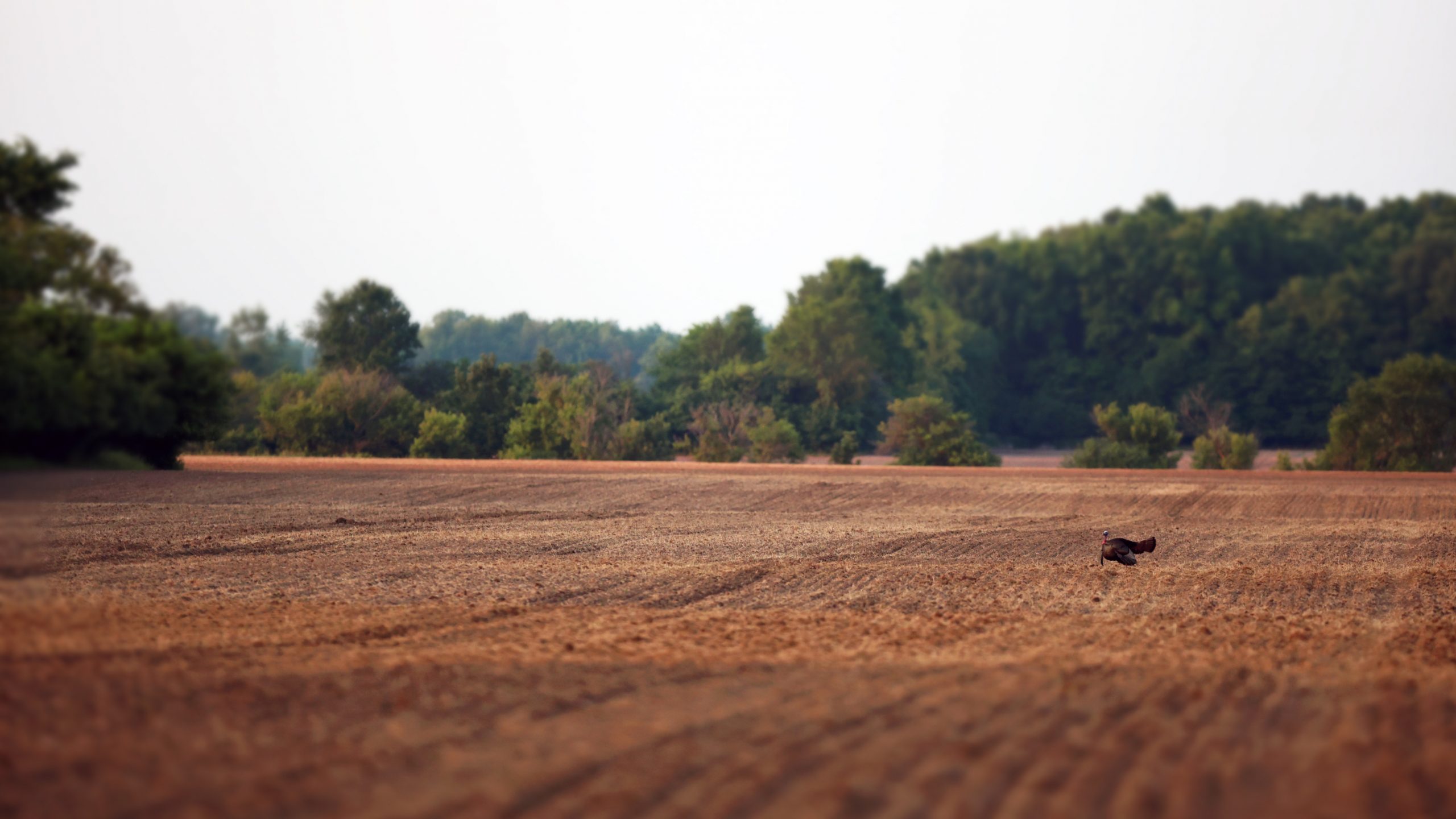
Tough Turkey Hunting Spots
Gobblers can put you in some funny situations, but experience and commonsense planning might help hunters get the upper hand.
Admit it. You’ve laughed at this story around the fire at turkey camp: Someone gets in a weird or difficult situation in the woods, pinned down or busted by a turkey, and the tale ends with comical results and an empty turkey tote.
It’s part of the spring game, and we generally accept that. Turkeys are finicky and unpredictable, and sometimes an old gobbler can turn your best efforts into a Keystone cop-like fiasco. However, veteran hunters have experienced most of these tough spots and know how to resolve them. Better, they’ve learned how to avoid them altogether. And when that knowledge is applied in the spring woods, it takes much of the sting out of many potentially hilarious campfire tales. Keep these in-field remedies in mind this season.
180 Degrees of Trouble
Every hunter with a season or two on his butt pad has been surprised by a gobbler that came in from behind their position and pinned them down. Often, it happens when a previously unseen or unheard turkey sneaks in while you’re working another bird.
If you’re hunting from a blind, this is no big deal, as you can usually turn around and open a back window without getting busted. Decoys also help, obviously, but they don’t guarantee success. Without a blind and decoys, this dilemma can be tough, especially if the bird isn’t inclined to move.
Try to track the gobbler by its gobbling or drumming, or turn your head enough to glimpse the turkey.
If your setup tree is sufficiently large, you might be able to slowly pull a 180 and roll on your belly, with your gun pointed toward the bird. And when a bird is behind you to your offhand shoulder — that is, your right shoulder for right-handers — you can sometimes slowly shift your gun and try to shoot the gobbler left-handed.
When you absolutely can’t move, you might have to wait and see if the bird will wander to your left or right, or in front. Avoid calling much or at all, as the gobbler can obviously see there’s no hen where he heard calling.
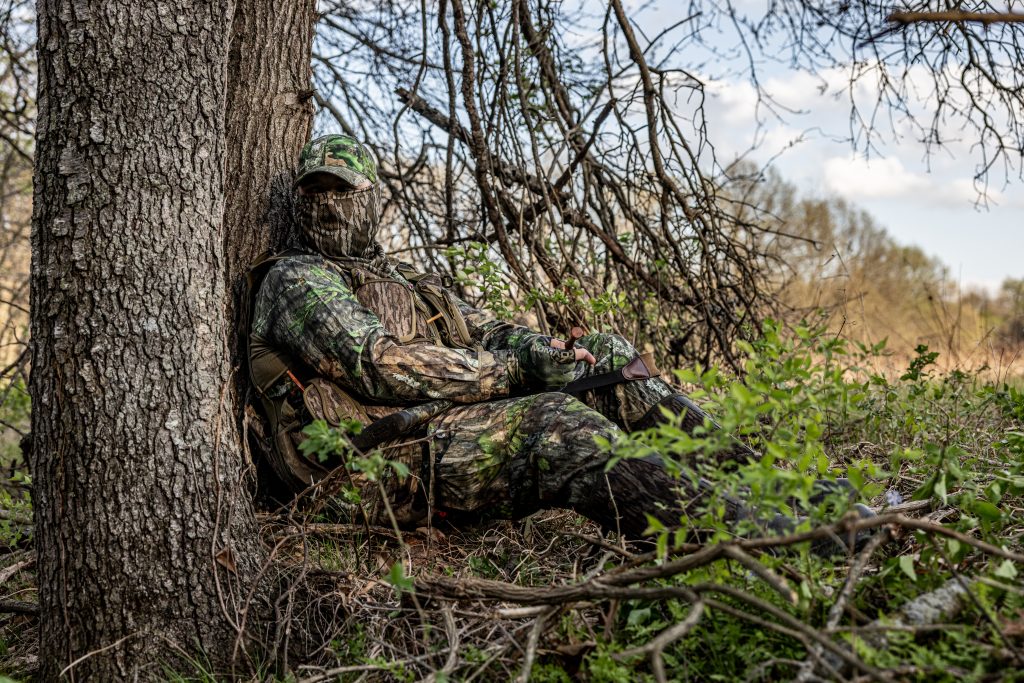
Sometimes, in really tough scenarios, you might have to let the bird wander off and reposition on him when he’s out of sight.
You can’t always prevent this situation. Sometimes, it helps to set up with your back to thick cover or a terrain drop, where a turkey can likely only come in from your front or side. But eventually, everyone will experience that sinking feeling of hearing the earth shake behind them.
Stuck in the Middle
Many days, folks hunt field edges by choice, setting up along the edge of cover with decoys in the open so a gobbler can see them from afar. But now and then, you’ll chase a turkey that ends up in a field while you watch seemingly helplessly from the sidelines.
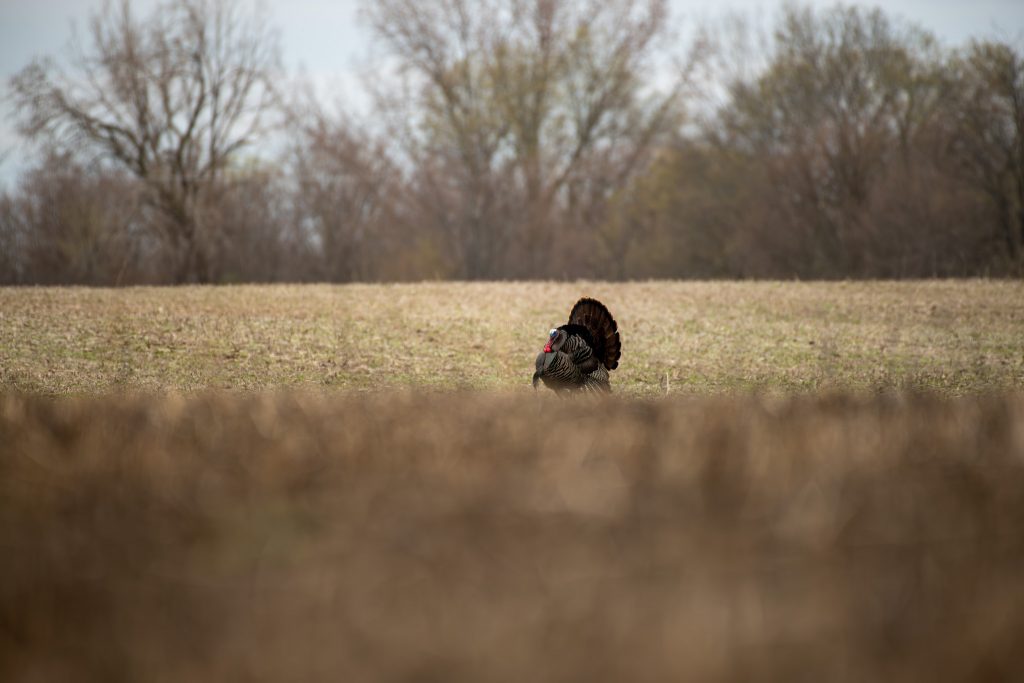
That’s frustrating, but it actually offers an advantage: You can keep visual tabs on the turkey and form a plan. Assess the situation, and use the surrounding cover to move to a workable setup. Note the turkey’s movements. Is he just strutting back and forth? Or is he traipsing behind some feeding hens slowly working across the opening? Some birds seemingly pop into a field and then drift back into the timber. But if turkeys are working across an opening, remember that they rarely go all the way across. Often, they’ll drift to one side or the other as they leave the field, much like a football player ducking out of bounds at the 30-yard line instead of running headlong to the end zone. Look for likely spots where the gobbler might enter and exit the field, such as logging roads, long points, open timber, cattle gates or other funnels. If possible, try to get ahead of the bird and set up at those spots.
If you’re carrying lightweight decoys, use ground cover to crawl a few yards into the field and stake out a fake or two. If you’re without decoys, set up a good distance into the timber so the gobbler can’t see the source of the calling. He might become curious enough to duck into the timber and check it out.
Whatever happens, be patient. Hunts for field turkeys can drag on for hours without much progress. But the turkey will eventually move, and if you’ve played your cards right, you could be in position to intercept him.
Surprise!
This should never happen, but it does. You’re walking and calling when a gobble erupts impossibly close, sending you scrambling for a tree, knowing you’re seconds from being busted.
Cutt-and-run hunters can easily avoid this heart-stopping dilemma. As you walk and call, always anticipate a close gobble, and be prepared. Analyze the woods as you go, making sure there’s a good setup tree at every spot where you intend to call. Further, scan ahead to identify ideal setups — rolling terrain breaks and bends in logging roads, for example — and stop 20 to 30 yards from those spots before yelping. Then, if a bird gobbles nearby, simply slip to your predetermined tree and anticipate the turkey’s head and neck popping into view to look for the “hen.”
Before moving on from a calling position, or when just slipping through the woods, constantly scan the timber ahead of you, and listen intently for any clues, such as drumming, scratching or soft hen yelping.
Always start a calling sequence with relatively soft stuff, and then listen intently between series.
With a careful, thoughtful approach, you can avoid most surprises.
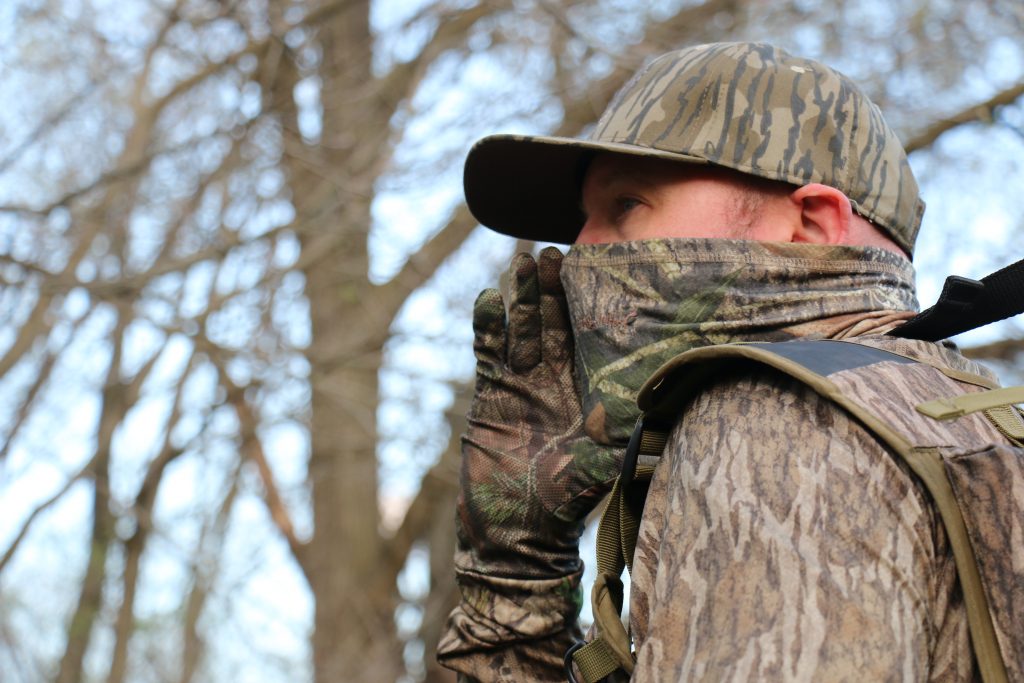
Now and again, however, a close turkey will catch you off guard. When that happens, realize that you probably have a bit more time than you think before getting busted. Don’t make a huge racket scrambling to a tree. Quickly and calmly locate a workable spot, and slip in there quietly. Then remain on full alert until the bird makes its next move. Sometimes, the gobbler might rush in, offering a shot. Other times, it might simply spit and drum out of sight, letting you adjust your position or plan your next play.
Tight Spots
Of course, turkey hunters can never completely avoid getting caught up in difficult situations. But with experience and foresight, you can at least make sure you have fewer funny stories — and more beards and spurs — than your buddies.