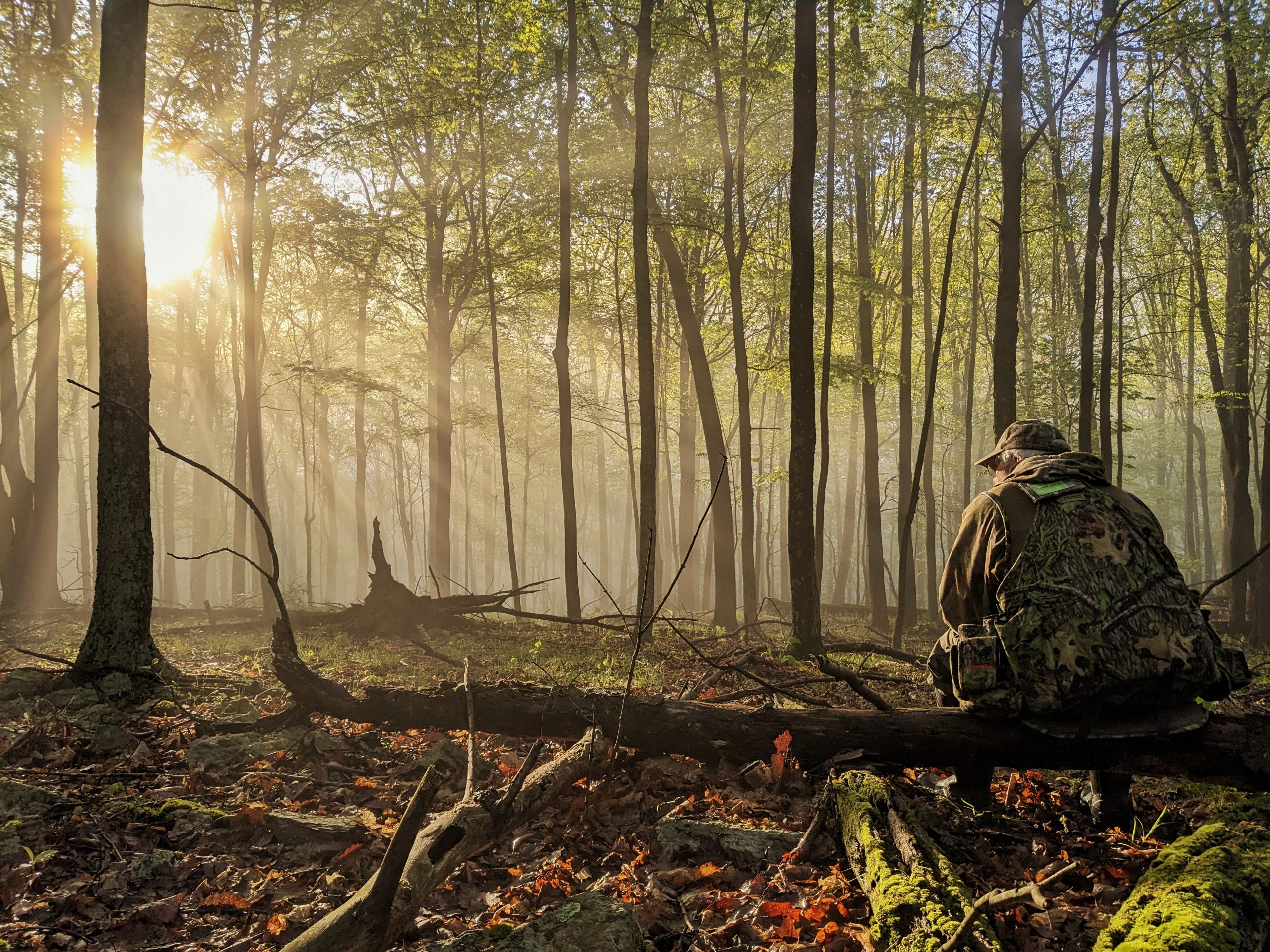
Turkey Hunting in the Southeast
The Southeast is steeped in wild turkey hunting tradition. From the river bottoms of Mississippi to the Smokey Mountains in Tennessee and the swamps of Florida, this region offers some of the most challenging and rewarding turkey hunting in the country. The area is primarily home to the Eastern wild turkey, with the Osceola found exclusively in Florida.
Rob Keck — former NWTF CEO, Grand National Calling Championships Hall of Famer and overall turkey hunting legend — has hunted wild turkeys in every state and all five provinces of Canada with huntable populations of wild turkey. While he suggests that each region has its own unique lore, there is something extraordinary about hunting wild turkeys in the Southeast.
“There's just so many different places here in the Southeast that appeal to me, whether it's hunting flooded backwater along the Mississippi river, to just some of the places that I've hunted in Alabama where the history runs so deep,” he said. “To me, the lore of the history and the heritage of the Southeast is what beckons me to always want to be here to hunt and hunt turkeys.”
Know Your Subspecies
Eastern Wild Turkey
(Meleagris gallopavo silvestris)
The most widespread subspecies in North America, Eastern turkeys are found across the entire Southeast. Known for their loud gobbles and long beards, they’re also among the most pressured and cautious birds.
Identification:
- Chestnut-brown tips on tail feathers
- Black-dominated wings with bold white bars
- Longest beards of any subspecies
- Adult males: 18–30 lbs | Females: 8–12 lbs
- Powerful gobble, but can go silent after fly-down
- Most abundant and commonly hunted subspecies
- Longest Beard: 22.5 inches (Texas)
- Longest Spurs: 2.5625 inches (North Carolina)
Osceola Wild Turkey
(Meleagris gallopavo osceola)
Found only in peninsular Florida, the Osceola is considered one of the toughest turkeys to hunt — both due to behavior and limited range. They're leaner and darker than Easterns, with a tendency to hang up out of range. The line between Osceola turkeys and Eastern turkeys isn't a physical line but a generalized line across Florida's peninsula, separating Osceola turkeys to the south from the Eastern wild turkeys to the north. This line generally follows the northern boundaries of several counties, including Duval, Alachua and Dixie.
Identification:
- Dark brown tail feather tips
- Mostly black wings with narrow white bars
- Shorter beards than Easterns
- Adult males: ~20 lbs | Females: 8–12 lbs
- Long legs, long spurs, strong but temperamental gobble
- Longest Beard: 19.125 inches (Lafayette, FL)
- Longest Spurs: 2.25 inches (Arcadia, FL)
Challenges Turkey Hunting the Southeast
The Southeast’s terrain is as diverse as it is demanding. Hunters often battle thick pine plantations, hardwood bottoms, ag fields, dense swamps and expansive-yet-pressured public lands.
Some of the primary challenges hunting in the Southeast include highly pressured turkeys. With a rich hunting heritage, many folks across the Southeast hunt and utilize their public lands. Consequently, many public lands see heavy traffic throughout the entire season. Southeastern turkeys are also very smart; thanks to a variety of different calling and variety of decoy setups, Southeastern turkeys have likely had the whole kitchen sink thrown at them before midseason.
Tips for Southeastern Turkeys
- Scout early and often
- Listen before the season starts and locate roost sites.
- Use binoculars to glass open fields and strut zones from a distance.
- Avoid over-pressuring birds by keeping your distance during preseason scouting.
- Walk farther than most. Then go even farther.
- Seek out overlooked terrain or isolated pockets of habitat.
- Consider hunting in the evening in states that allow it. Everybody wants the textbook morning roost hunt, but evening hunts can work out exceptionally well and provide ample gobbles.
- Continue hunting later in the season when pressure drops.
Use Natural Terrain to Your Advantage
- Travel along logging roads, creek beds, fire breaks and old burn lines to move quietly.
- Turkeys often follow predictable travel corridors like ridgelines or fence lines — set up just ahead of them.
Call Less, Listen More
- Soft yelps, clucks or scratching in the leaves can be more effective than loud sequences.
- If a bird hangs up, go silent — sometimes, curiosity kills the gobbler.
- Use decoys sparingly. On pressured birds, a full-strut tom decoy can spook more than it attracts. Try a single feeding hen or no decoy at all.
Pro Tip: Position Over Perfection
“I can think of many times having to move four or five and six times before I get to a place where that turkey feels comfortable in coming,” Keck said “And, you know, I think that experience really helps you determine calling position because positioning is far more important than the call itself. I think people take and put too much emphasis on the calling part of it. Although, as a world turkey calling champion, I love good calling, but if you're in the wrong position, you're probably not going to call him in. And so you've got to develop a feel for what works, what kind of a place does that turkey feel comfortable in coming to you and using, different land determinations or physical barriers, so to speak, to help maybe direct that turkey to you, whether it's on a road, along a fence line, on a ridge line, along a creek or whatever it happens to be.”
In short focus on where the turkey wants to go, not where you want to call from, and use terrain barriers to guide gobblers into range.
Conservation in Action: Habitat for the Hatch
Turkey hunting success depends on healthy habitat — and the Southeast is an exceptional spot for restoration efforts. The NWTF’s Habitat for the Hatch initiative is working to restore over 1 million acres of nesting and brood-rearing habitat in the region. The NWTF is also providing critical funding to a variety of wild turkey research projects across the region. What’s more, the NWTF and the University of Georgia created the first-ever endowed professorship dedicated to studying the wild turkey in perpetuity. Learn more about how the NWTF’s efforts in the Southeast are working to ensure our hunting traditions.
In Short
Turkey hunting in the Southeast is a test of patience, adaptability and respect for tradition. The birds are wily, the terrain can be unforgiving, the pressure is real, and sometimes there seems to be no rhyme or reason to it all. But for those who hunt quietly, move with purpose and take time to understand the nuances of turkey hunting in the region, few regions offer a deeper or more meaningful hunting experience.