Turkey Woods Critique: Memories or a Fresh Approach?
A recent Missouri hunt seemed familiar to those of springs past, but it illustrated the importance of open-minded strategies for tough gobblers.
If you spend enough days in the turkey woods, you start to notice trends and patterns. And after a while, you get a keen idea of setups, situations and tactics that seem to produce consistently.
But that also creates a conundrum. After enough déjà vu hunts, it’s easy to slip into a comfortable pattern and expect gobblers to act the same way again and again — which, as veteran hunters know, doesn’t usually happen. For example, if you’ve slipped into a field edge and called up a longbeard two consecutive years from the same tree, it’s easy to assume that the same approach will work the next spring. Turkeys might not read that script, leaving you sitting by that favorite tree scratching your head.
When success doesn’t come easily, it’s logical to question whether you’re hunting smart and efficiently or have just fallen into a rut. And the distinction can be blurry. Are you following best practices or just hunting memories? Sometimes, a quick self-critique in the field can get you back on track.
Missouri Memories or Smart Moves?
This past April, I joined world champion caller Steve Stoltz, of Woodhaven Custom Calls, for our annual hunt in northern Missouri. Stoltz and I have teamed up for almost three decades in that locale, sharing many great hunts on familiar ground. So it was no surprise that our initial hunt seemed like a flashback. Stoltz roosted several turkeys at a go-to flydown spot the first evening, and we planned a setup similar to one we’ve used many times. We didn’t know it, but the hunt provided a tutorial on discerning the difference between observing and reacting versus simply following previous footsteps.
The next morning, the turkeys obliged initially, gobbling well on the limb and flying down into a strip of woods not 100 yards from our setup. Then, however, they did their turkey thing and simply drifted away with hens, gobbling sporadically at Stoltz’s yelping but never really showing interest in breaking away. Eventually, they eased toward the property line, and Stoltz and I departed. A seemingly sure thing had faded away, leaving us looking at Plan B.
We checked some other properties later that morning without much success. A cool wind and low pressure seemed to shut the birds up. And when rain showers hit later, the job seemed even tougher. Late in the morning, however, a trip down a gravel road revealed several wet gobblers at field edge. We couldn’t hunt the field but had access to the neighboring woodlot. Stoltz and I had never killed a turkey at that spot, but he didn’t waste time reacting. We drove out of sight, ditched the truck, half-sprinted through the trees and set up. And when a bird gobbled at Stoltz’s first series of calls, the game was on. Minutes later, three brilliant heads popped into view, and one gobbler stayed. We were on the board at a fresh spot, thanks to a quick decision.
Mark II
The next morning, conditions improved, and Stoltz and I slipped into another go-to area, again following a script that had worked during previous springs. Again, the turkeys didn’t care about our plan, flying down into a field, gobbling only now and then, and eventually fading into some timber and going quiet. A quick follow-up effort produced nothing, and our fly-down hunt was finished.
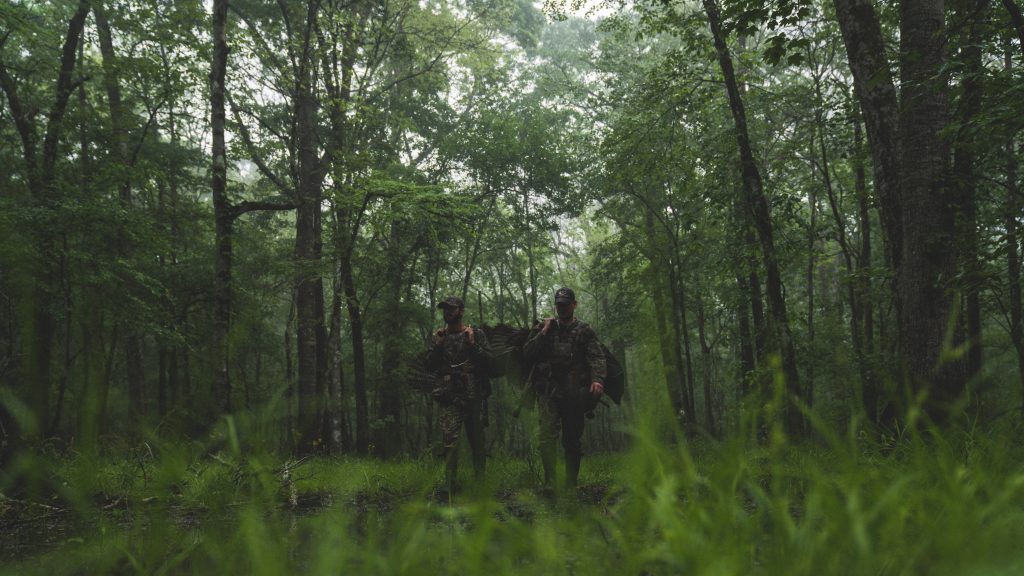
Our next option involved hitting another familiar spot — one where Stoltz had experienced considerable success the past few years. Considering our early morning hunts, it was easy to wonder if we were simply relying on memories or making the right call. But there was no doubt the spot typically held turkeys, and we’d made it work there before. The key would be to tackle the situation on its individual merits and not simply hoping things played out as they had during previous hunts.
Ironically, the hunt started out just as many at that property had. We parked the truck at a muddy gate and walked in along cattle paths on a long pasture. And before we reached the timber, we heard a bird gobble on its own on a far bluff. The scenario was almost a repeat of the previous spring’s hunt, as there was really only one option to engage the turkey. Just as in previous years, we crossed a small creek, scampered up a thick hillside and slipped somewhat tight to the gobbler. Stoltz yelped to check the turkey. The bird responded but obviously wasn’t going to charge in. In fact, it had faded away a bit.
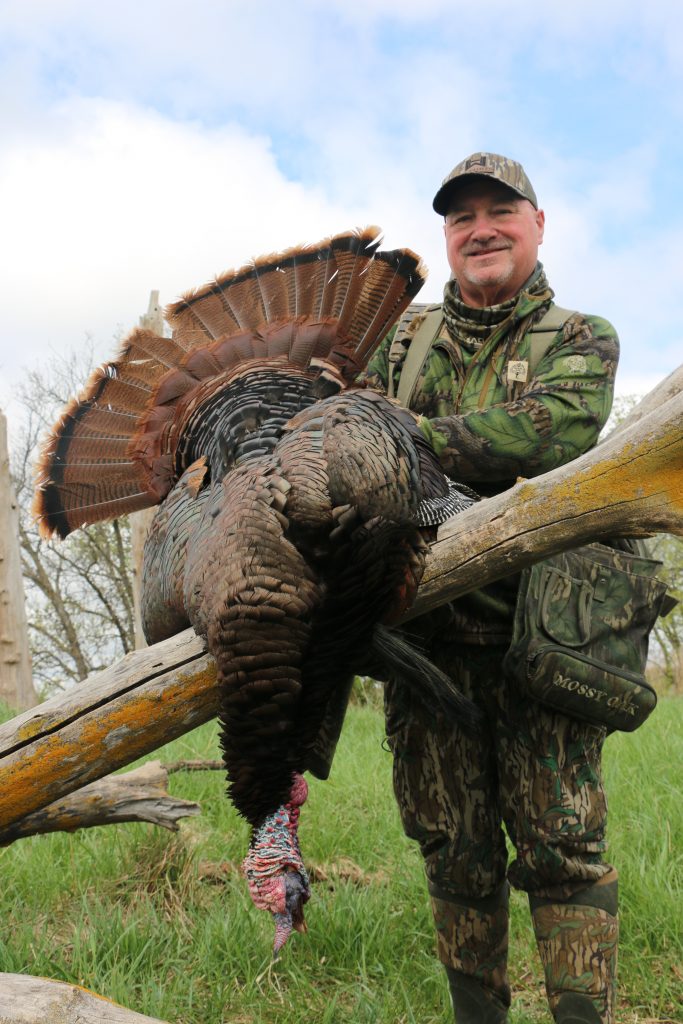
With that, Stoltz was off, endeavoring to slip closer to the longbeard while I stayed behind. Listening to the hunt unfold, I tracked Stoltz’s position through his soft yelping and the gobbler’s responses. And after what seemed like a long pause, a gunshot told me the deal was done. Soon, Stoltz returned, holding a dandy Missouri heavyweight over his shoulder. He’d gotten close to the bird — almost too close. And when he settled in and called, three gobblers responded almost within sight and quickly marched in. It had played out perfectly — just like in springs past but with a fresh twist.
Finding the Difference
While admiring the gobbler, Stoltz and I compared the hunt to that of the previous season. Still, it had been no trip down memory lane. Stoltz had just done what a good hunter should, reading the situation and reacting in the best possible way, with good woodsmanship and realistic calling. That approach might have echoed tactics from previous hunts, but it’s a pretty darn good playbook for turkeys anywhere.