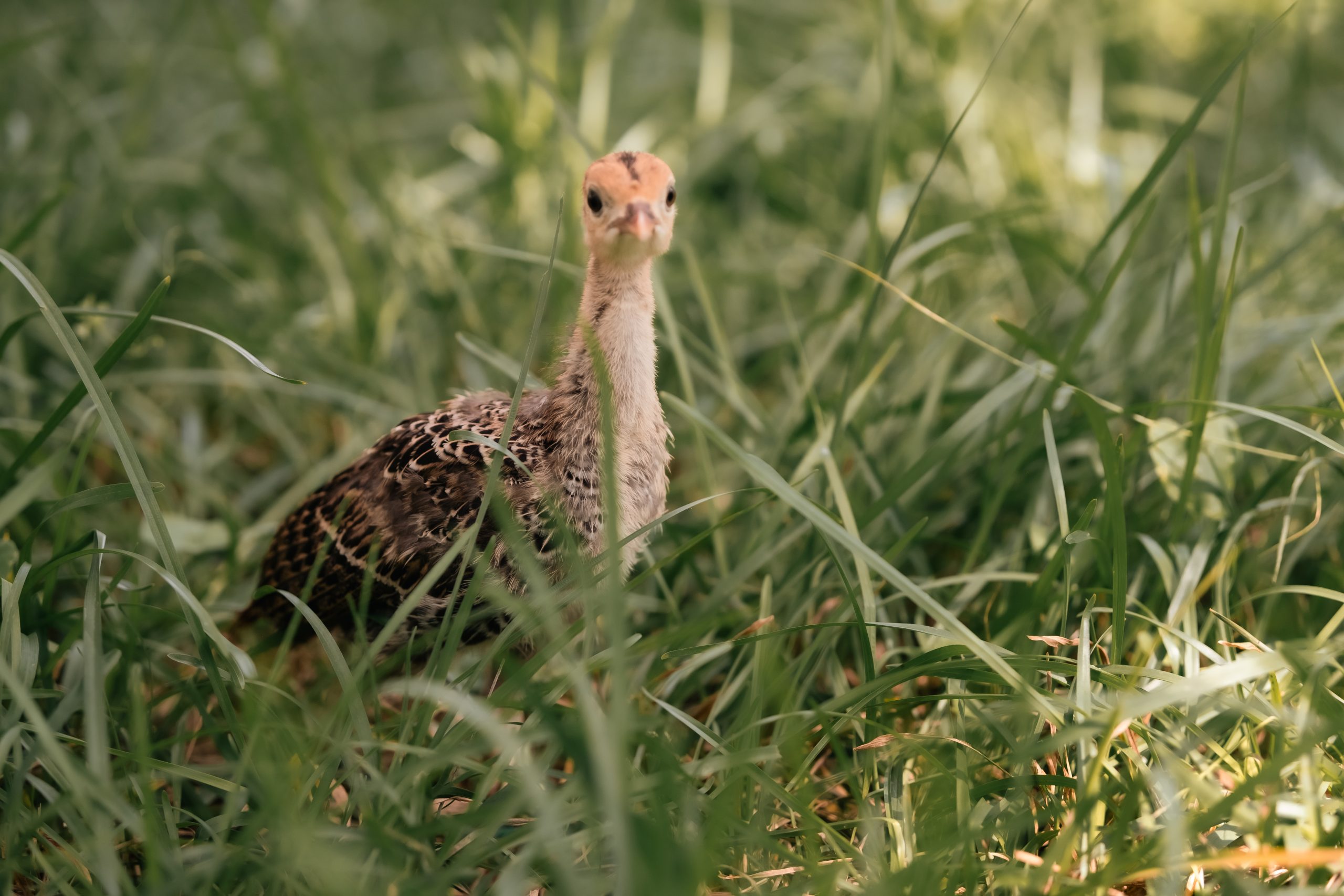
UF Game Lab Begins New Poult Habitat Project
EDGEFIELD, S.C. — The University of Florida’s Game Lab has launched a research project focusing on Eastern and Osceola wild turkey poult survival, with partial funding provided by the NWTF through its 2025 investment in wild turkey research. The research team will evaluate how different environmental factors such as vegetation, insect abundance, heat and precipitation might be affecting captive poult survival.
“This [project] is isolating predation from other factors,” said Marcus Lashley, Ph.D., associate professor at the University of Florida. “We do have some other work in wild populations looking at predation rates, but in this case, we’re really focused on how the vegetation is providing food and buffering poults from other environmental factors and keeping predation separated from that.”
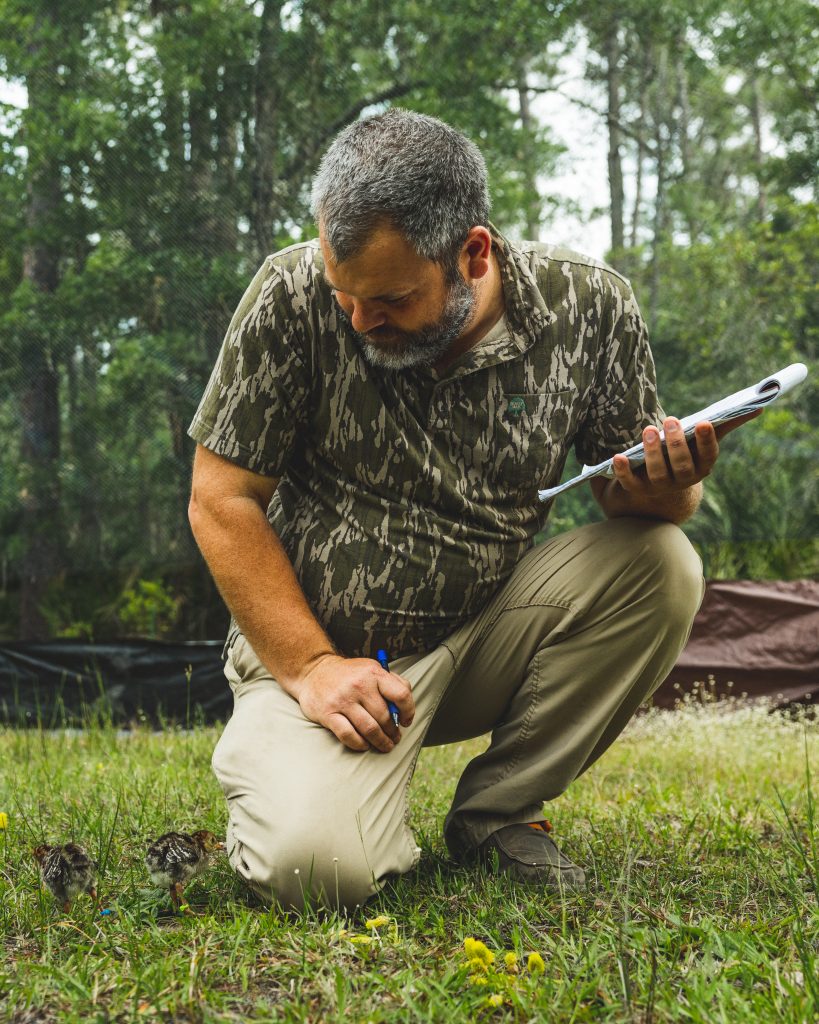
In the spring of 2025, the UF Game Lab worked with the Florida Fish and Wildlife Conservation Commission to get the necessary permits to collect viable wild turkey eggs from nests of wild hens that died or abandoned the nest during active incubation. The research team secured access to an incubation facility and two large flight pen aviaries to incubate eggs and begin the research. Researchers can manipulate vegetation treatments in aviaries and raise imprinted poults in those treatments, thanks to an agreement with the USDA National Wildlife Research Center.
“Wild turkeys have been in decline in some areas, and there's some data that suggests that poult survival is limited,” Lashley said. “The problem is, this is our least studied life stage, because it's really difficult to study [poults] and understand what is happening to them in the wild.”
The research team has already established a captive wild turkey population, which allows them to start investigating questions regarding the short- and long-term effects of habitat quality during brood-rearing on wild turkey survival in a replicated experimental design.
“The really interesting thing about this [project] is that we’re able to measure fine-scale things related to the poults that weren’t possible in other settings,” Lashley said.
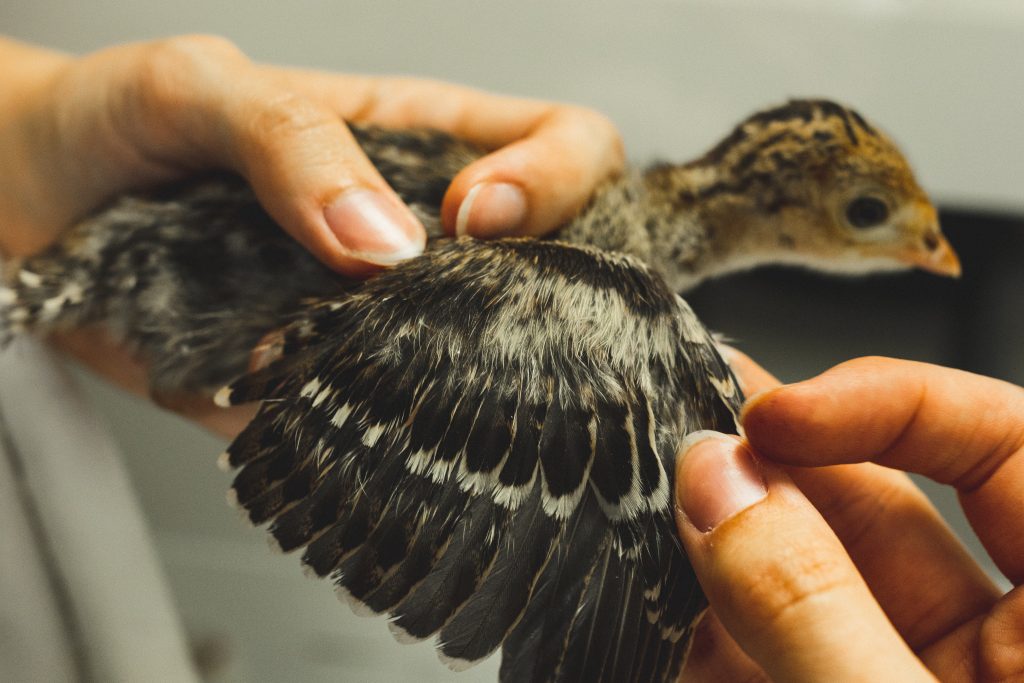
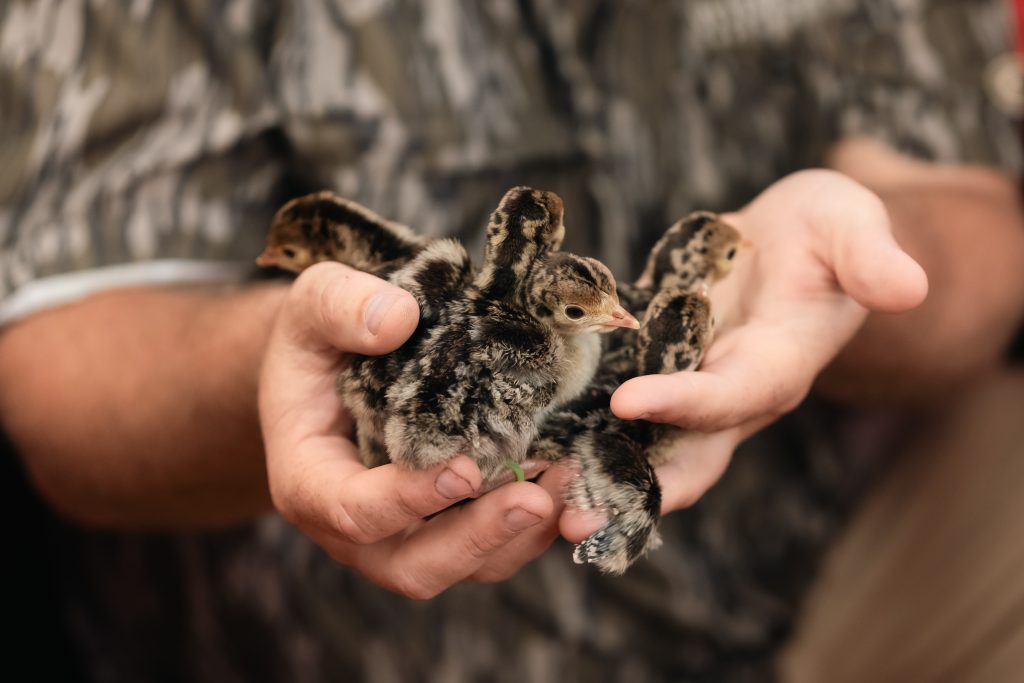
Other imprinting studies Lashley cited were short-lived, but his research team has the unique opportunity to observe and monitor poults for the first two weeks of their life, which is typically how long it takes them to get to flight. Researchers measure the poults’ weight four times per day and track individual growth rates.
This project is designed to allow researchers to evaluate habitat management strategies and measure effects on survival and growth until adulthood. Results will equip landowners and land managers with the necessary information to improve their land management practices to promote brood-rearing success across the range of turkeys. This directly addresses the objectives of the Habitat for the Hatch Initiative by providing information that will directly benefit habitat management in the landscape encompassed by the initiative.
“We have a manuscript in preparation that describes the fine scale growth development of poults from the egg all the way to adulthood, which has not been measured before,” said Lashley. “It's been pretty remarkable to see how fast they grow. Our preliminary results have already shown that there seems to be a pretty clear effect of vegetation characteristics on poult growth rate. We also found that heat exposure is a really big problem at this life stage in Florida.”
The research team has two more field seasons planned to look at different habitat treatments going into each year and working out the best way to manage brood-rearing habitat, which the NWTF is providing funding for.
For live poult updates from the UF Game Lab, visit the Lab’s YouTube channel.
The NWTF invested funds in the above project along with eight other wild turkey research projects across the United States, totaling $503,618, for the organization's 2025 research investment. Since 2022, the NWTF and its partners have combined to put more than $22 million toward wild turkey research.
Thanks to support from dedicated volunteers and partners — such as the Bass Pro Shops and Cabela’s Outdoor Fund and NWTF state chapters — the NWTF’s RFP Program is an aggressive, annual effort to fund critical wild turkey research projects nationwide.
About the National Wild Turkey Federation
Since 1973, the National Wild Turkey Federation has invested over half a billion dollars into wildlife conservation and has positively impacted over 25 million acres of critical wildlife habitat. Since 2022, the NWTF has also invested over $2.3 million in critical wild turkey research that, when leveraged with partner contributions, has resulted in more than $22 million to guide the management of the wild turkey and to ensure sustainable populations. The organization continues to deliver its mission by working across boundaries on a landscape scale to deliver healthy forests and wildlife habitats, clean and abundant water, resilient communities and robust recreational opportunities. With the help of its dedicated members, partners and staff, the NWTF is committed to creating a nation united by the life-changing power of the outdoors.