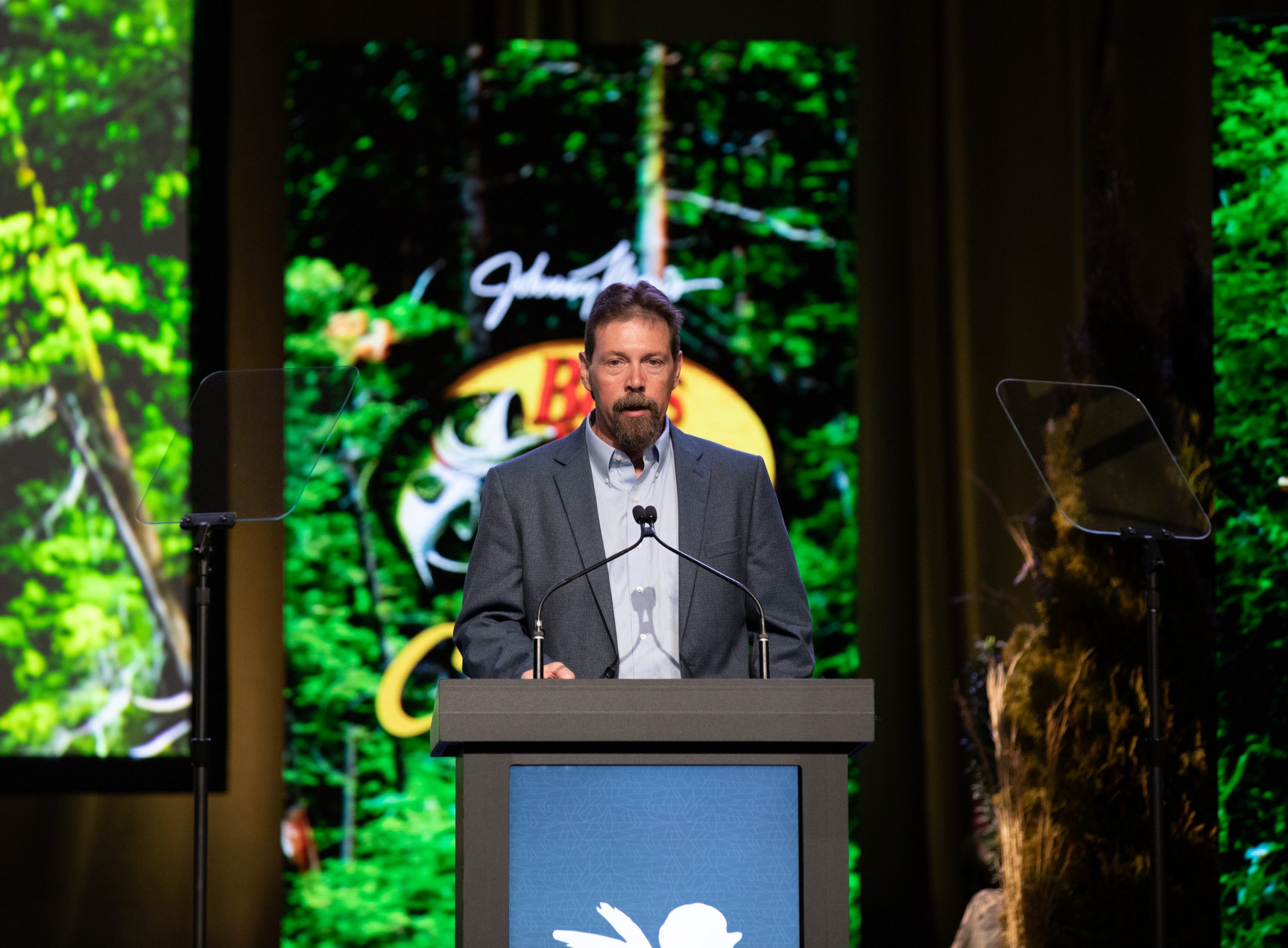
Wild Turkey Status Update with Mike Chamberlain
At the convention’s Rendezvous event, Dr. Mike Chamberlain of the University of Georgia gave an overview of the status of wild turkey research.
Chamberlain began by explaining wild turkey research really began in the 1980s, just as restoration efforts were beginning in earnest. By the 1990s, turkey populations appeared sound, hunting enthusiasm was on the uptick and, with things looking good, research efforts dropped off.
The documented population declines of the last decade and more, though, showed things were amiss in the world of the wild turkey. Changing land management practices, increased predators, including hunting pressure, plus emerging diseases such as avian pox were all having impacts. The ability of hens to successfully produce and protect young turkeys until they could survive on their own seems to have diminished severely. Chamberlain said turkey nesting seasons expanded to about four months, up from the 60 days previously experienced.
Answering the myriad questions about what is going on with turkey populations is now a priority, Chamberlain said.
“More research is being done on wild turkeys than at any time in my career,” he said. The amount of energy and resources being expended by state agencies, including some states that never devoted much attention to wild turkey study, tells him “turkeys are a priority.”
Another positive, he said, is that researchers are “getting out of their silos,” with research increasingly standardized.
“This will allow for better data comparison,” he noted.
Chamberlain cautions that there is no one “silver bullet” to address the turkey population situation. Studying the birds at a broad scale is needed to inform changes in policy and practices that will help ensure the health and sustainability of these incredible gamebirds.