Working Where There Are No Turkeys
The NWTF occasionally connects the dots, working where turkey populations are sparse, to provide the opportunity for more.
For those who associate the National Wild Turkey Federation’s work exclusively with gobbling birds and spring mornings in the hardwoods, it might seem surprising to hear that NWTF is investing time, money and expertise in wildfire mitigation across the arid West, often in places where turkeys may be rare or absent altogether.
But a deeper look reveals that this work is not just consistent with NWTF’s mission – it’s essential to it.
This organization’s story is about more than turkeys. It’s about partnerships, landscape-scale restoration, and how smart, collaborative conservation benefits game and non-game species alike. Further, it’s about a business model that allows hunters and other conservationists in the private sector to help federal land management agencies achieve their missions, and an organization that is willing to do whatever is necessary to catalyze active management of our public lands.
Since its founding in 1973, the NWTF has grown from a single-species conservation organization to a broader, landscape-focused leader in wildlife management and an ardent promoter of our collective hunting heritage. Wild turkeys are still the heartbeat of the Federation, but the organization’s work increasingly focuses on the stewardship of our federal public lands, notably our National Forest System and those managed by the Bureau of Land Management, wherever they may occur.
Federal stewardship contracting was pioneered by NWTF more than three decades ago, and it’s based on a simple premise: private, nonprofit organizations work differently than federal agencies. In many cases, that means that organizations like NWTF can conduct habitat restoration, maintenance and conservation projects faster than federal partners. On the ground, this means that NWTF staffers are planning, contracting and executing a wide range of projects on public lands owned by all of us, in ways that save taxpayer dollars and consistently center benefits to wild turkeys.
The scope and scale of this work varies. These efforts began exclusively in core turkey habitat but have since expanded to a broader geography for a variety of reasons. Notably, because the experts at NWTF are so efficient at what they do, their expertise in landscapescale conservation and project management is valued and requested across the nation. This collaborative model of landscape-scale conservation mirrors what successful turkey restoration has always required: partnerships, persistence and an extended time horizon. Healthy turkey populations don’t materialize out of thin air. They depend on quality habitat across a variety of North American landscapes, including oak woodlands, riparian corridors, longleaf pine forests, and even dry ponderosa pine stands in the West, where wildfires threaten entire ecosystems and the people who call them home.
This is a natural evolution of the mission that this organization has always been, and will continue to be, dedicated to: “conservation of the wild turkey and the preservation of our hunting heritage,” in service of delivering on the Federation’s vision of “a nation united by the life-changing power of the outdoors.”
Unhealthy forests and rangelands, including those overcrowded with small-diameter trees and choked with underbrush, pose enormous risks to the future of our public lands. Catastrophic wildfire seasons in the West are becoming the norm, not the exception. These fires threaten communities, destroy critical wildlife habitat, and degrade air and water quality. Many of these ecosystems evolved with fire and depend on it, but today’s fires are burning hotter and faster than ever before. We know that healthy forests don’t just benefit turkeys. They support a wide array of wildlife and ecosystem services, but maintaining forest health, especially on our public lands, requires active forest management at a pace that government alone cannot achieve.
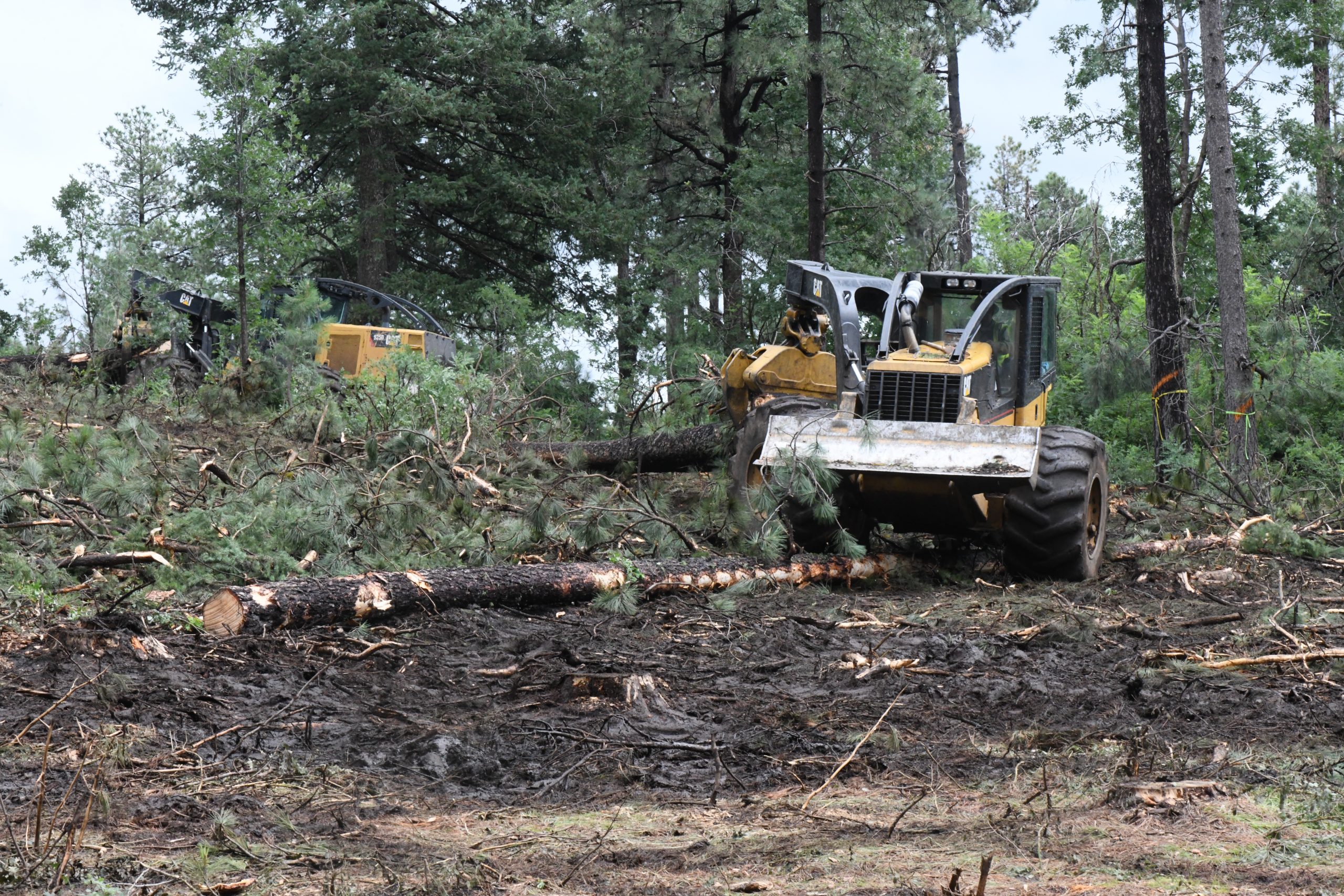
NWTF invests heavily in proactive forest management. The same thinning and prescribed burns that reduce wildfire severity also help create the open understory conditions preferred by many wildlife species, turkeys included. These treatments can promote the growth of forbs and grasses, reduce disease and insect pressure on timber stands, and restore ecological function.
NWTF’s footprint in the West includes states with both robust turkey populations and some with little turkey habitat at all. From Arizona to Idaho, from Oregon to Utah, NWTF staff members are helping implement forest health projects in collaboration with the U.S. Forest Service, Bureau of Land Management, state agencies and other nonprofit partners. In places like northern New Mexico or western Colorado, these projects often serve multiple goals at once, like restoring historic ponderosa pine forests, reducing the intensity of wildfires and improving watershed health.
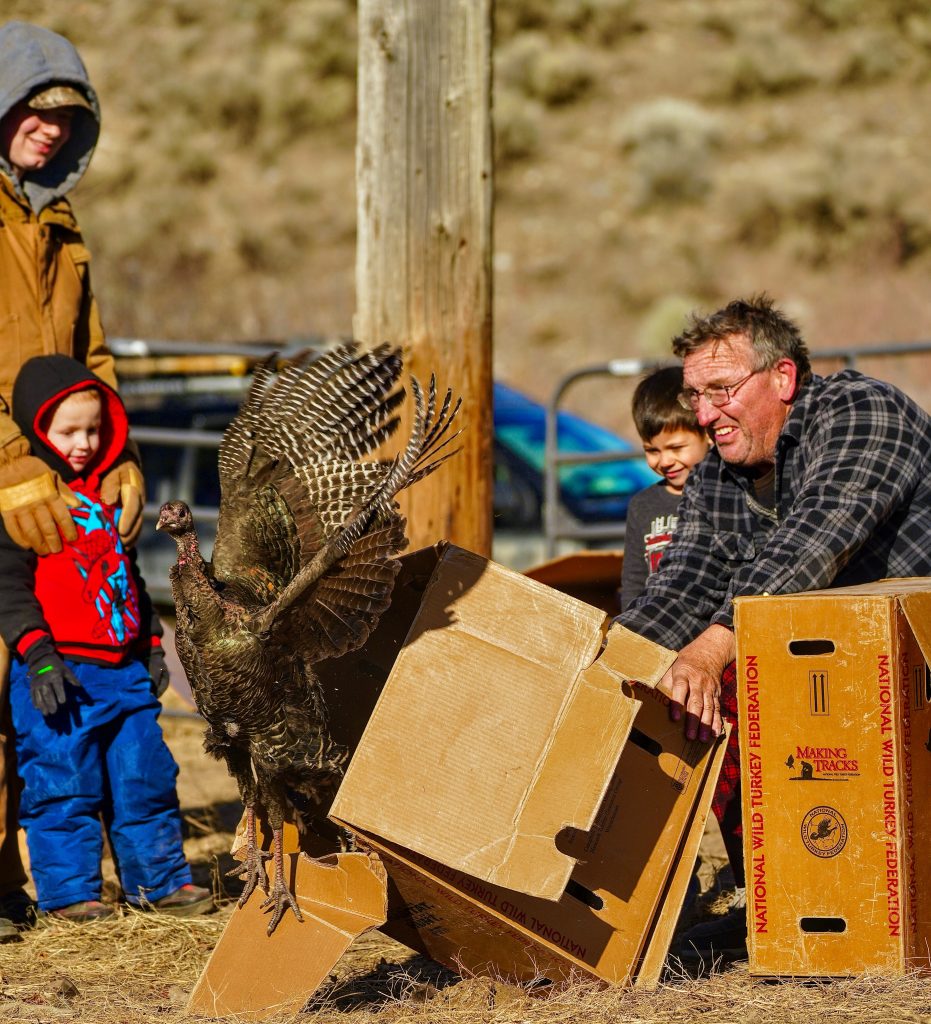
When NWTF helps reduce hazardous fuels on a Western landscape through thinning or prescribed fire, the experts are not just preventing catastrophic wildfires – they are helping create the kind of mosaic that wildlife can thrive in. And in some cases, it’s paving the way for turkeys to return to places they’ve been absent for decades.
Even if the project area doesn’t have turkeys now, these efforts help connect to habitat that does or reduces fire risk in a way that protects nearby watersheds and creates conditions more favorable to future turkey reintroduction. And in some cases, funds from these projects help NWTF build capacity – through hiring foresters, biologists and technicians – who then apply their expertise to work that does directly benefit turkeys elsewhere.
And just as important, these efforts support communities. Hunters and anglers are often the first to notice a trail washed out by fire or a population of turkeys that’s disappeared after a megafire. By working with rural communities and public agencies to improve forest health, the NWTF is helping maintain the access, opportunity and natural heritage that matter to all of us.
That’s why the Federation’s work nationwide is so critical. When the NWTF shows up to help restore a watershed in Idaho or reduce wildfire risk in Oregon, it is demonstrating the hunting community’s longstanding ethic of stewardship. It ensures hunters have a voice at the table when decisions are being made about public lands. And it reinforces the idea that hunting and conservation are not just compatible — they’re inseparable.
Too often, the hunting community’s conservation efforts are siloed by geography, species or agency boundaries. But wildlife doesn’t recognize state lines, and neither should we. By contributing to collaborative conservation wherever there’s a need, and whenever there’s an opportunity, NWTF helps ensure that hunters remain trusted, effective advocates for the land, making NWTF stronger, more flexible and more relevant. As turkey hunters and conservationists, it’s natural to focus on the birds themselves, but the work of sustaining robust populations of birds and a responsible community of hunters requires a wider lens.
That’s the kind of leadership that brought turkeys back in the first place, and it’s the kind of leadership that will ensure these birds will remain on the landscapes of North America for generations to come.