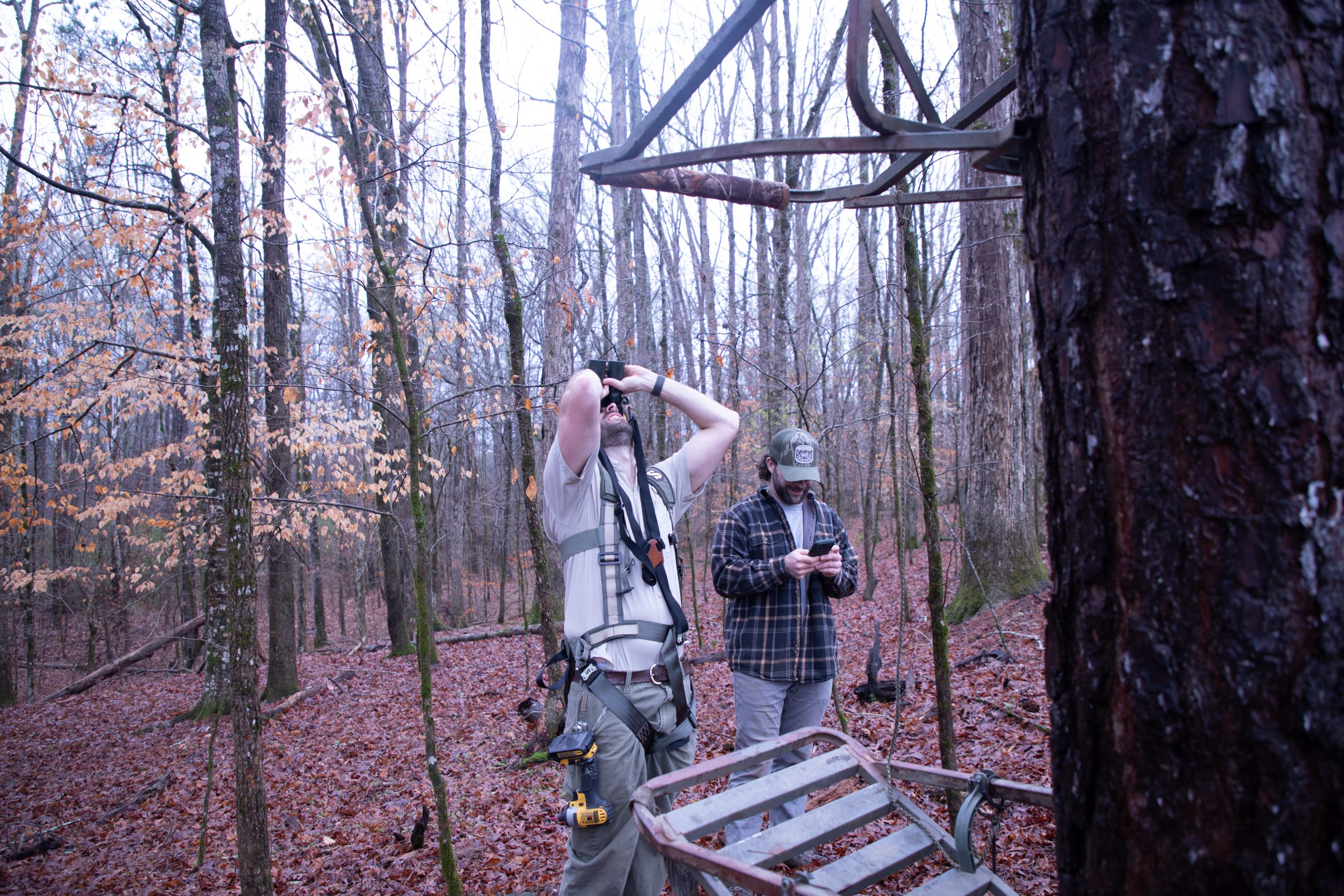
In the Field with Dr. Patrick Wightman
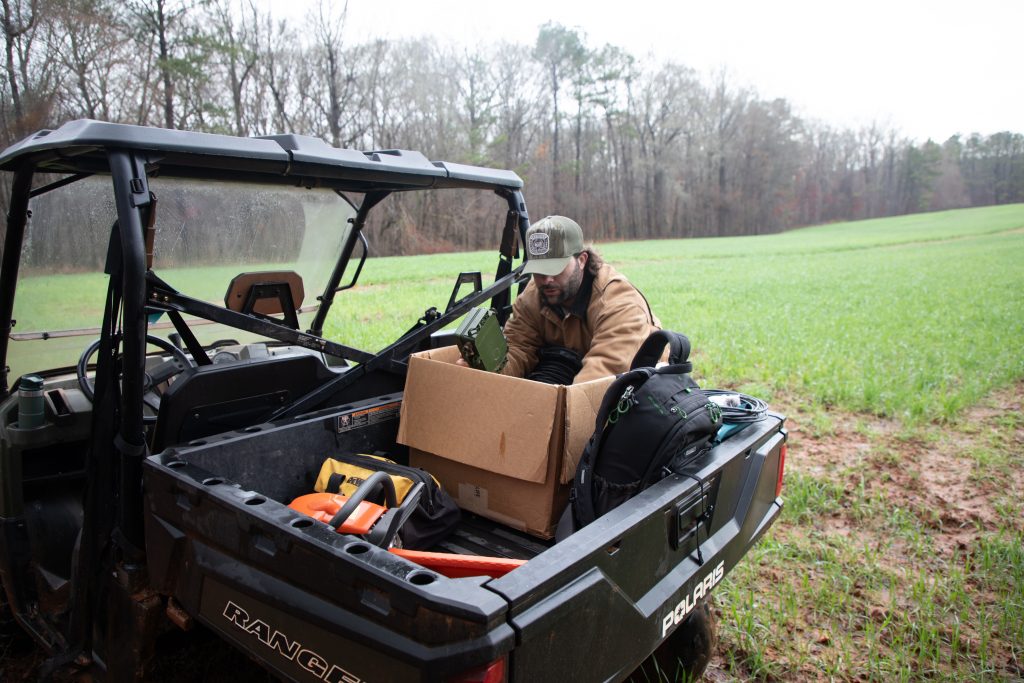
After loading a couple UTVs with equipment, Patrick Wightman stepped out to the edge of the forest and cut a series of yelps on a diaphragm call, the anticipation of spring building.
Not a modicum of a shock gobble.
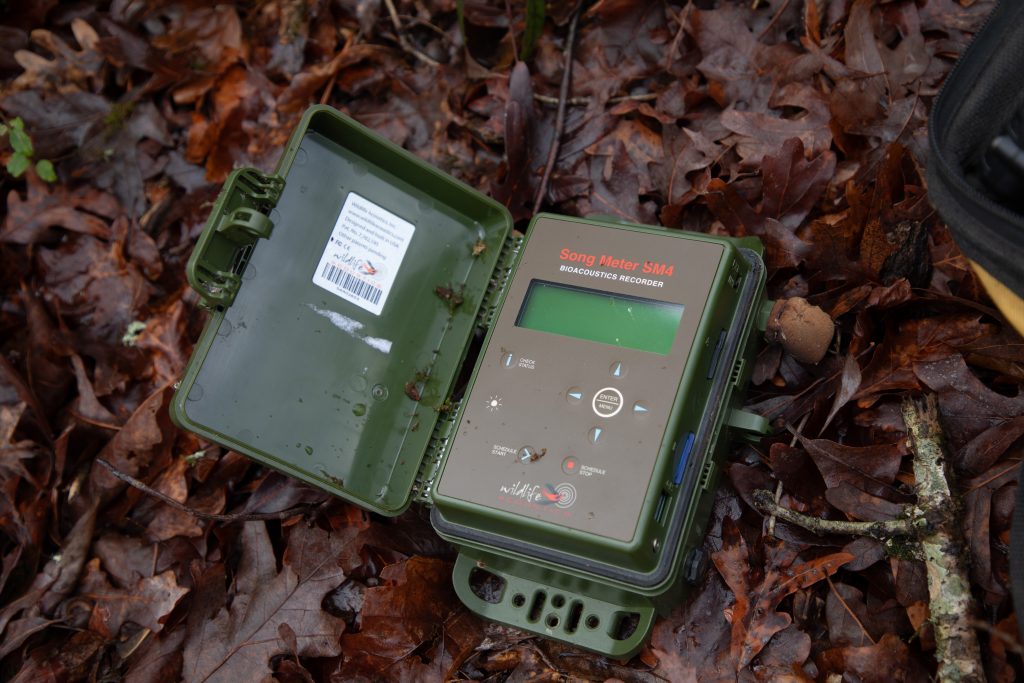
However, a web of acoustic recording units (ARUs) Wightman and his team were about to hang across the forest would soon capture plenty of turkey sound.
Before being hired in January as the NWTF national director of wild turkey research and science, Wightman conducted several wild turkey research projects through the University of Georgia’s Warnell School of Forestry and Natural Resources.
The ARU project we were on site for was funded in part by the NWTF in 2024 and 2025 through the organization’s national Request for Proposals program, a program that Wightman now oversees in its entirety.
The project actually builds off Wightman’s early work as a graduate student at Louisiana State University. Since 2015, Wightman has deployed these recording devices across the Southeast to monitor gobbling activity, gauging a better understanding of male wild turkey gobbling and how external factors affect it. For instance, through his research, Wightman has determined that hunting pressure affects gobbling in almost all aspects, such as where, when and how often toms gobble.
But what actually goes into collecting this data? Surprisingly, a lot of tree climbing, some handiwork, power tools held together with tape and the inevitable odd experience in the woods.
The day started by gathering early at UGA’s B.F. Grant Memorial Forest, a large property that adjoins both USDA Forest Service land and Georgia Department of Natural Resources land. Wightman has hung ARUs on this specific location since 2018.
Wightman was accompanied by Nick Gulotta, postdoctoral researcher at the Warnell School of Forestry and Natural Resources. Each hopped in a UTV loaded with ARUs, tools, mics, a tree-climber stand and hundreds of feet of analog audio cable.
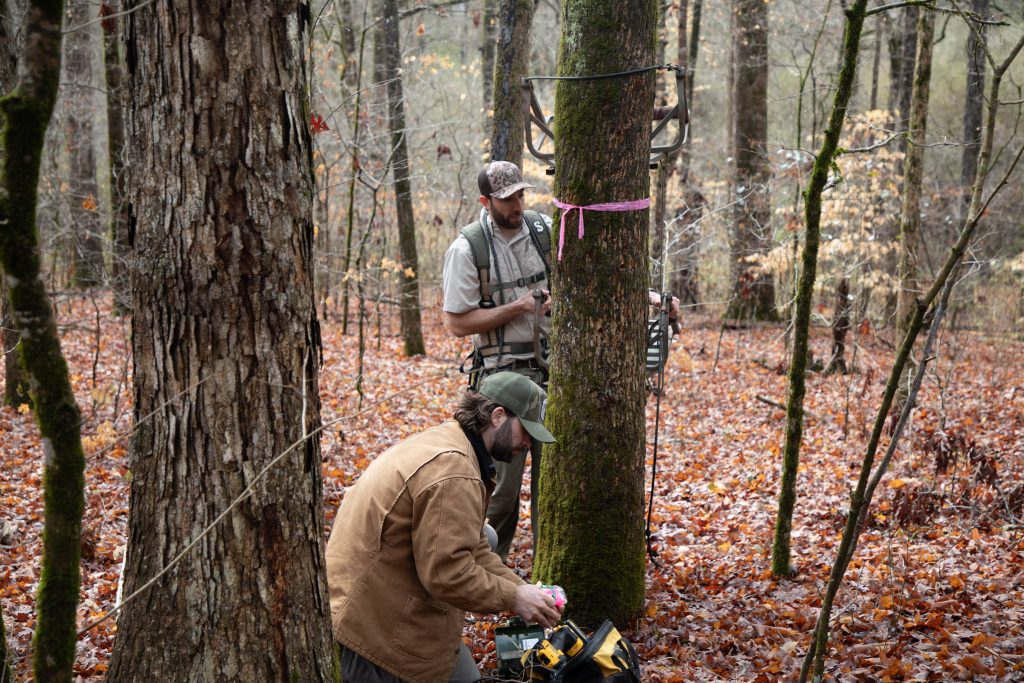
At the first site, Gulotta began programming the ARU as Wightman threw on a harness and began climbing a loblolly pine. Wightman first hung a mic about 25 to 30 feet up into the tree. He then connected an audio wire to the mic, and climbs down to about 10 feet, where he mounts the ARU that Gulotta programmed for recording.
Wightman noted that these recorders are set to begin an hour before sunrise until four hours after sunrise, recording all ambient sound, including songbirds, gobbles and even us talking about our spring turkey hunting plans.
My immediate thought was: How do you accurately tease out a gobble from thousands of hours of audio from a season?
“What we've done is train models to know not what a gobble sounds like, but what it looks like,” Wightman said. “And then the program goes in there, and it can identify the majority of turkey gobbles that occur just based on the look of the acoustic signature."
Wightman noted that this allows him to go beyond just sounds that fall within a similar frequency, such as crow caws, gunshots and doors slamming, and definitively identify a gobble by its signature on a spectrograph.
As Wightman and Gulotta traversed around the forest hanging recorders, they had a few casual run-ins with folks using the public lands. They ran into a gentleman who was hog hunting and chatted with him about wild turkeys and told him about the research going on. He was enthused, as he had just attended a UGA seminar on habitat management.
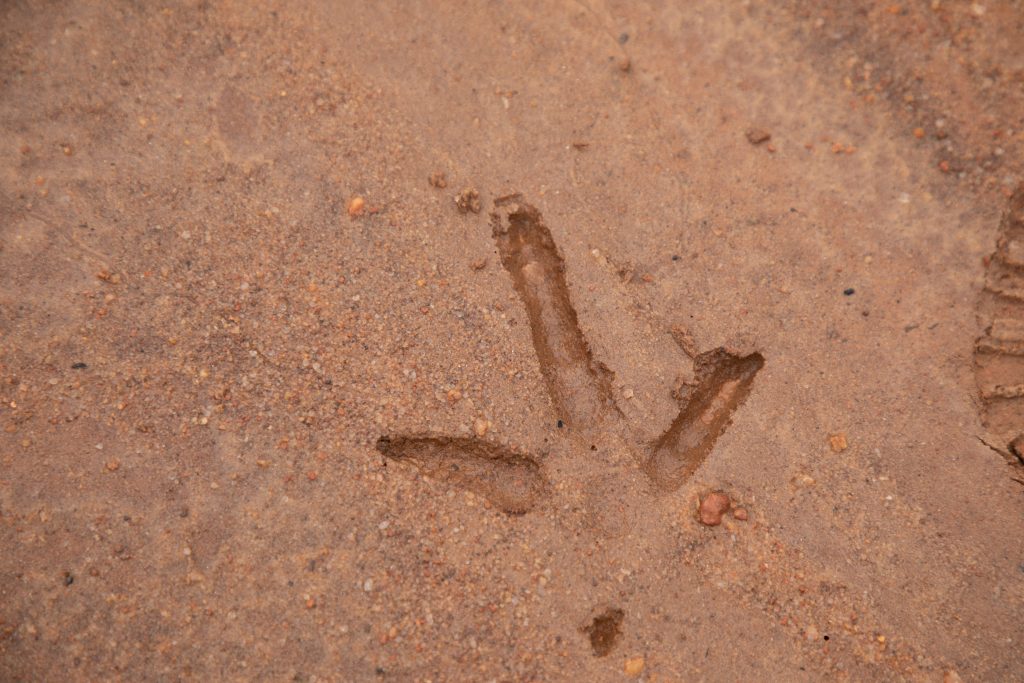
We were at another site hanging an ARU well off the beaten path when a man materialized at about 20 yards away. Once he had noticed we had seen him, he slipped off the trail into the bottom and disappeared.
“That was weird,” Wightman said. “But not out of the ordinary.”
Wightman and Gulotta reflected on the many strange experiences they’ve had in the years hanging ARUs in remote locations.
Tree by tree, the two continued hanging recording devices and were able to get 16 units up before dark.
While Wightman has amassed a significant amount of data through the ARUs, the most recent iteration of the project includes attaching specialized GPS transmitters with built-in recording units to individual birds and combining the new individualized data with the ARU data.
After over a decade of hanging ARUs and with a new busy role leading the NWTF’s research program, Wightman was both nostalgic and relieved to pass on the field duties to the next generation of researchers.
In addition to logging a staggering catalog of gobbles through this work, Wightman has also logged countless hours in the woods thinking about the wild turkey and why he has chosen to dedicate his career to conserving it.