New NWTF-Funded Research Aims to Understand How Management Strategies Shape Gobbling Activity
For more than a decade, researchers at the University of Georgia have been quietly listening to the spring woods — literally.
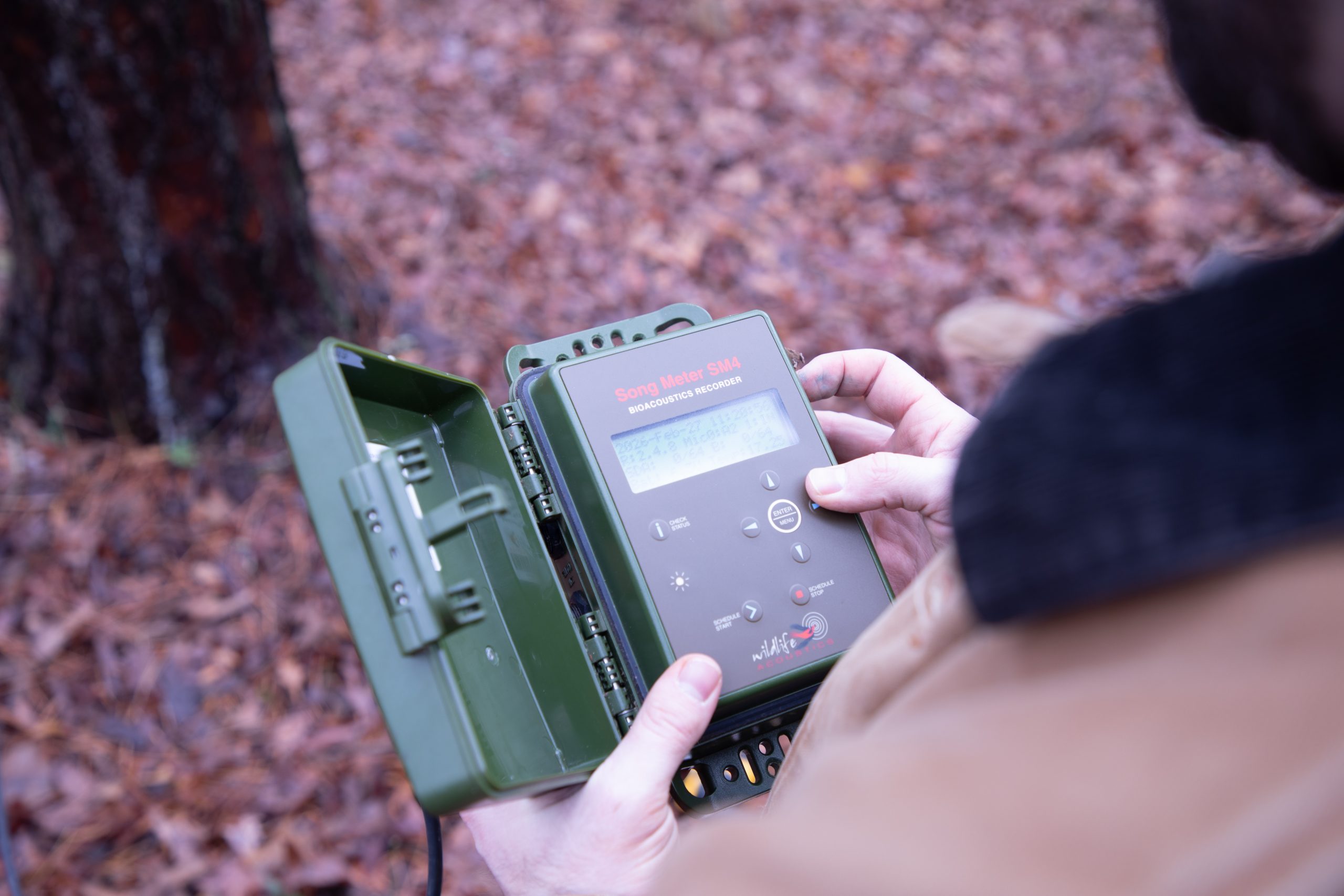
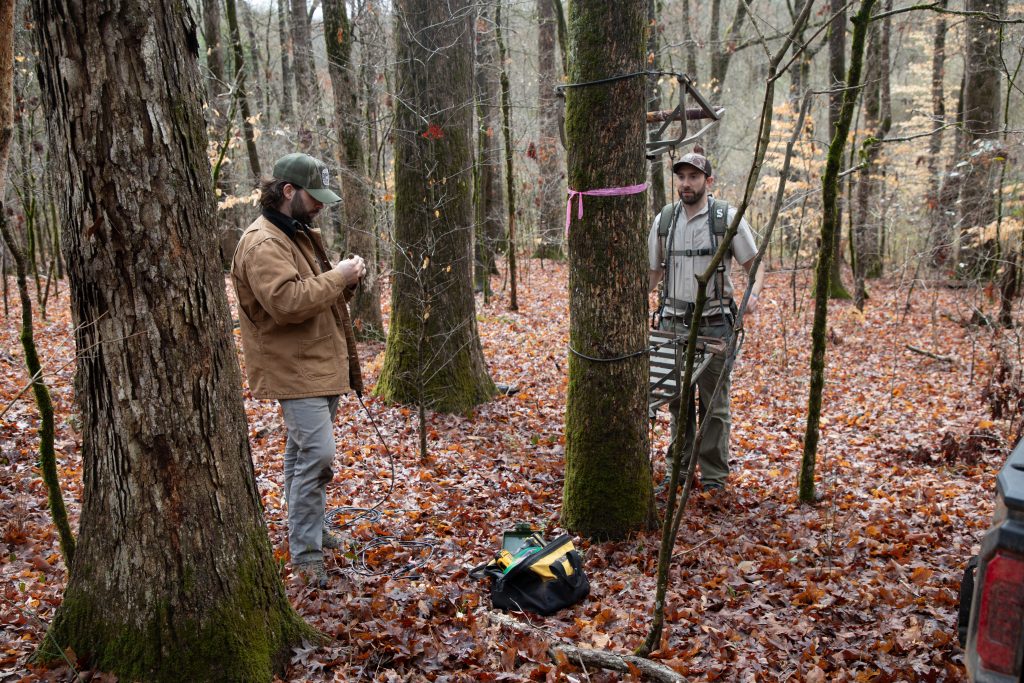
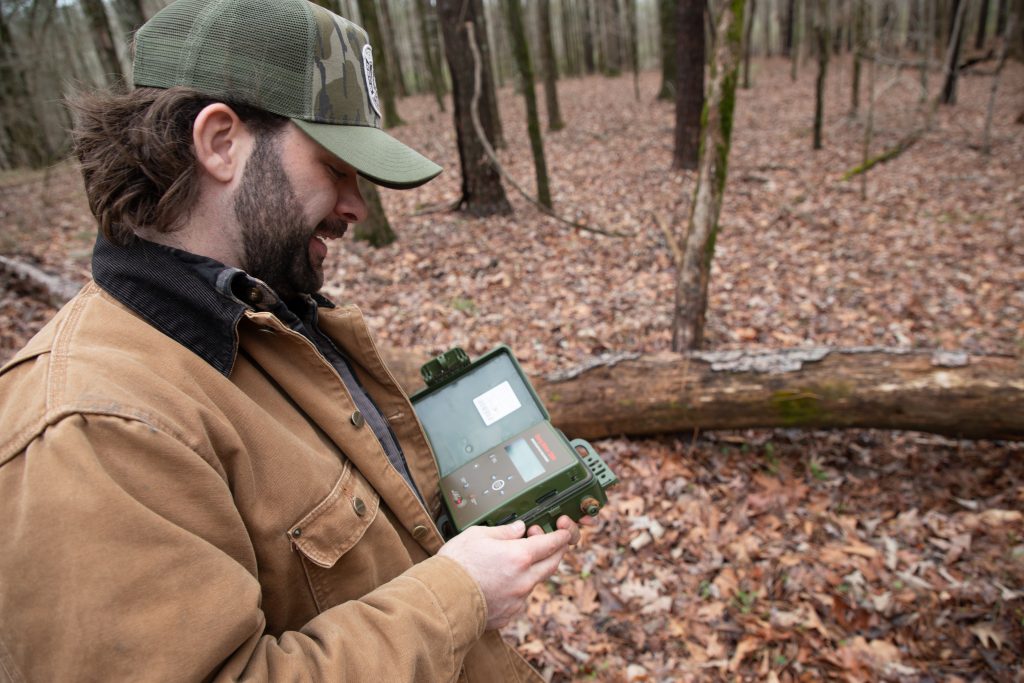
Using a vast network of autonomous recording units (ARUs), Patrick Wightman, NWTF national director of wild turkey research and science, and his team have captured the daily rhythms of wild turkey gobbling across Georgia, South Carolina and several other states. Their work has revealed how hunting pressure can dramatically change how much turkeys gobble.
Now, thanks to newly awarded support from the National Wild Turkey Federation’s 2025 wild turkey research investment, Wightman and colleagues are expanding this long-running project to answer a pressing question for wildlife managers, hunters and conservationists alike: How do different hunting regulations like delayed season openers or quota-based access affect gobbling activity in the spring woods? And importantly, can these tools help support both healthy turkey populations and high-quality hunting experiences?
Spring turkey hunters know the magic of hearing a turkey’s thundering gobble and, conversely, how quickly a silent morning can sour the hunt. But gobbling is more than an adrenaline spike for hunters. It’s a behavior tied to male breeding displays, interactions with other males and overall reproductive ecology.
“Gobbling activity is highly correlated with hunter satisfaction,” Wightman explained. “A lot of hunters on these WMAs complain that gobbling activity drops off after the first couple weeks of the season, and our research supports that.”
This isn’t only because pressured birds become tight-lipped. On hunted sites, gobbling declines for several reasons. Some males shift away from high-pressure areas while others are harvested, taking male birds off the landscape.
On unhunted sites like the Savannah River Site in South Carolina, where Wightman has monitored gobbling activity since 2014, the gobbling pattern looks very different. Gobbling ramps up predictably in early to mid-March, peaks around mid-April and gradually tapers off into June.
But on hunted sites, Wightman says, “Once hunting season opens, gobbling activity drastically decreases within the first two weeks.”
Agencies across the Southeast, and elsewhere facing declining turkey populations, have responded by adjusting season dates and lengths, reducing bag limits and, on certain properties, limiting early-season access or implementing quota-style hunts. Often these actions are intended primarily to stabilize populations by reducing harvest and hunting pressure during the breeding period; however, they also create an opportunity to evaluate whether such regulations positively influence gobbling activity and, in turn, improve hunter satisfaction.
Until now, however, there has been little data to determine whether these management actions and changes have positive impacts on gobbling activity. NWTF is helping change that.
Beginning in spring 2026, Georgia Department of Natural Resources (DNR) will implement a week-long quota hunt at Cedar Creek Wildlife Management Area, one of the two WMAs where Wightman and colleagues have collected gobbling data since 2017.
Historically, the area opened to anyone who signed in. But with hundreds of hunters on the landscape opening weekend and declining turkey numbers, Georgia DNR is trying a new approach: reducing early-season hunting pressure by limiting access to a randomly selected 100 hunters during the first week.
This change created what Wightman describes as “a perfect before-after, control-impact scenario”— the kind of natural experiment that scientists rarely get handed.
“We already have all the equipment to deploy on the landscape, and when the new project finishes, we will have ten years of gobbling data under different season structures and quota regulations,” Wightman said. “When I learned about the new quota system, I realized we had an opportunity to actually test whether it dampens that big early season drop in gobbling we’ve been seeing.”
Thanks to NWTF funding, the research team will analyze data from acoustic recorders across roughly 60,000 acres of huntable public land in Georgia, plus around 100,000 acres on the unhunted South Carolina reference site and potentially incorporate data from study sites across several other states. By comparing gobbling activity before and after the quota implementation, across years with different season start dates, and in conjunction with data from the unhunted site, the team hopes to pinpoint how regulatory changes influence turkey behavior and hunter experience.
This project is also a part of an NWTF-funded study in which individual ARUs,combined with GPS transmitters,were fitted to wild turkeys to capture gobbling activity from specific birds. Data from these ARU-GPS transmitters continues to be combined with overall ARU datasets, helping improve the understanding of gobbling behavior.
Why This Work Matters to NWTF Members
Turkey hunters across the Southeast are adjusting to seasons that look different than they did a decade ago. Later openers, quota hunts and new harvest limits have become common as states respond to declining turkey numbers and new science on reproduction and hunter pressure.
For some hunters, those shifts can feel like lost opportunity. That’s why Wightman believes this research, and NWTF’s support of it, is essential.
“If agencies are going to make changes based on population concerns or hunter satisfaction, we have to know whether those changes actually work,” he said. “Without the science, adaptive management doesn’t exist.”
He emphasized that supporting research is a way hunters can have a direct impact on the future of the resource they love.
“By supporting science, you’re supporting not only potential changes to help turkey populations, but also the ability to measure whether those changes are having the desired effect,” Wightman said. “And if they’re not, we need to do something different.”
This new project will help fill that knowledge gap, giving state agencies, hunters and the NWTF data-driven insight into how to balance conservation, opportunity and hunter satisfaction.
Although the research is centered in the Southeast, Wightman believes its implications could ripple far beyond Georgia and South Carolina.
“If we find that a one-week quota or delayed season opener helps maintain gobbling activity, I could definitely see this being a catalyst for managers nationwide,” Wightman said.
From flagship WMA hunts to regions facing similar population declines, the findings could guide how agencies structure spring opportunities to conserve the resource while keeping hunters in the game.
Beginning in spring 2026, Wightman and his team will utilize their network of acoustic recorders, collecting data through the 2027 spring turkey season in hopes that meaningful answers will be found, supporting healthier turkey populations and improving the hunting experience on public lands.
Through its National Request for Proposals Program, the NWTF invested in this project along with eight other wild turkey research projects across the United States, totaling $503,618 for the organization's 2025 research investment. Since 2022, the NWTF and its partners have combined to put more than $22 million toward wild turkey research.
Thanks to support from dedicated volunteers and partners — such as the Bass Pro Shops and Cabela’s Outdoor Fund and NWTF state chapters — the NWTF’s RFP Program is an aggressive, annual effort to fund critical wild turkey research projects nationwide.