Innovative Technologies in Wild Turkey Research
NWTF’s national Request for Proposals program supports ongoing and new research projects implementing cutting-edge techniques and technologies for answering complex questions related to wild turkeys.
Supported by more than $22 million in three years from NWTF and multiple conservation partners, studies using advanced tracking technologies and molecular sampling techniques are enabling investigators to collect invaluable information about wild turkeys throughout their distribution.
Accelerometers and Iridium Transmitters
Another novel innovation has been the incorporation of accelerometers for Global Positioning System (GPS) transmitters equipped on adult wild turkeys.
“The GPS point just gives you a point in the same place,” Chitwood said. “The accelerometry data allows you to potentially interpret the actual behavioral state of the tagged bird.”
By analyzing the rate or speed of travel by a wild turkey, researchers can use this detailed information to interpret space use behaviors, health and preferences of the individual.
“When a bird is on a nest or roost, before we could only see that it was still,” he said. “With accelerometry data, we can see when the bird is active or disturbed. This technology allows us to look at really unique situations and behaviors.”
The next phase of the project plans to use Iridium transmitters for monitoring wild turkeys. Iridium is a satellite-driven technology network where the GPS data is uploaded directly to a satellite every day rather than having to go out in the field, locate a tagged bird and remotely download GPS data. Until recently, Iridium technology had previously been too heavy for equipping wild turkeys.
“The OSU research team’s plan is to utilize Iridium technology that has been used in the big game world, but now we can finally use it to study wild turkeys,” Chitwood said.
Iridium transmitters will reduce the time and human effort required for tracking wild turkeys while also increasing the precision of monitoring efforts.
Genetic Techniques Offer Regional Insights
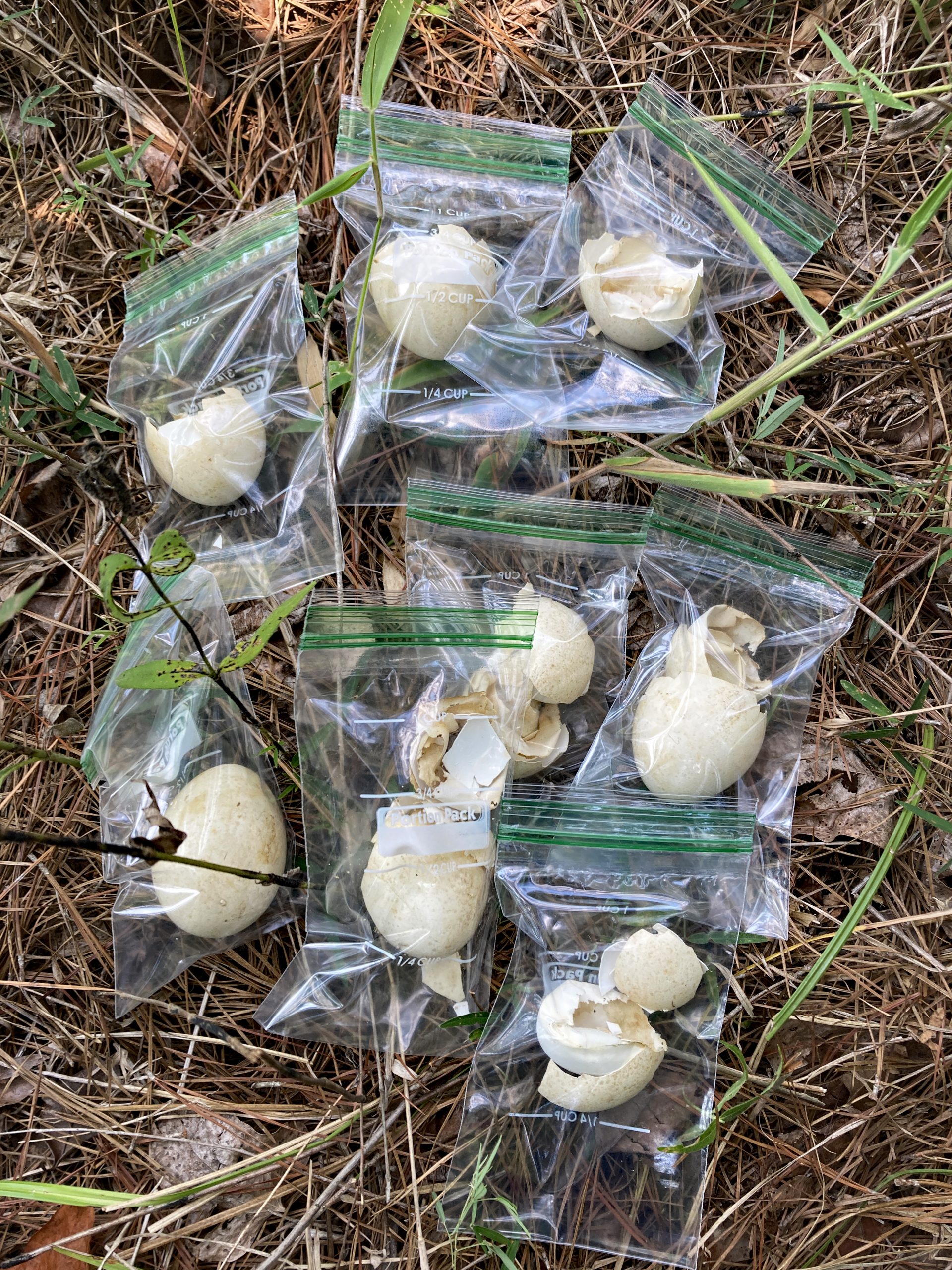
One of NWTF’s desired management outcomes for scientific research projects includes the use of advanced tools such as non-invasive molecular approaches to improve monitoring of wild turkey populations.

Supported by the 2023 NWTF national RFP program and commencing this year, researchers at the University of North Texas are implementing a range-wide metabarcoding and DNA analysis of wild turkeys by leveraging citizen scientists, long-term datasets and genetic techniques. Led by Andrew Gregory, Ph.D., assistant professor of wildlife spatial ecology and conservation at the UNT, the project is working to link regional genetic diversity, diet, disease and population data to better understand how the health and demographics of wild turkey populations differ across the landscape.
“We can learn a lot of valuable information that can benefit habitat management agencies and interagency cooperation by recognizing the genetic boundaries of the species that do not follow state or management boundaries,” Gregory said.
The collaborative initiative involves mailing sampling kits to NWTF members, turkey hunters and participating agencies to collect wild turkey scat for microsatellite analysis and DNA metabarcoding. The collectors also record the GPS location and submit photographs of the site for assessing land cover.
“With the microsatellites, we can look at the population genetic structure of turkeys on a national level – fairly low resolution but we can see if one region is genetically distinct from another,” Gregory said. “The DNA metabarcoding will detect the presence of potential pathogens or parasites that are present within that group of turkeys and analyze plant and invertebrate types to see if there are differences in diets by region.”
One of the primary objectives of the project is to compare the molecular DNA results with standardized, long-term count data, such as Breeding Bird Survey (BBS), to model population trends and identify which turkey groups are stable versus those in decline and what differences or stressors might be influencing those trends on a genetic level.
“Although it is not turkey-specific, BBS data has a systematic and consistent level of rigor and institutional organization of the datasets being collected, making their year-to-year trends suitable for use in integrated population models,” Gregory said.
Tracking Poults
Researchers with Oklahoma State University are performing a comprehensive five-year research project using a variety of radio telemetry technologies with the Eastern subspecies in the southeast region and the Rio Grande subspecies in the southwest region of the state. This project was partly supported in 2023 by NWTF’s national RFP program as well as the NWTF Oklahoma State Chapter and the Oklahoma Department of Wildlife Conservation.
“The wild turkey research world is benefiting, like so many others, from the plethora of technological opportunities,” said Colter Chitwood, Ph.D., principal investigator and assistant professor of natural resource ecology and management at OSU.
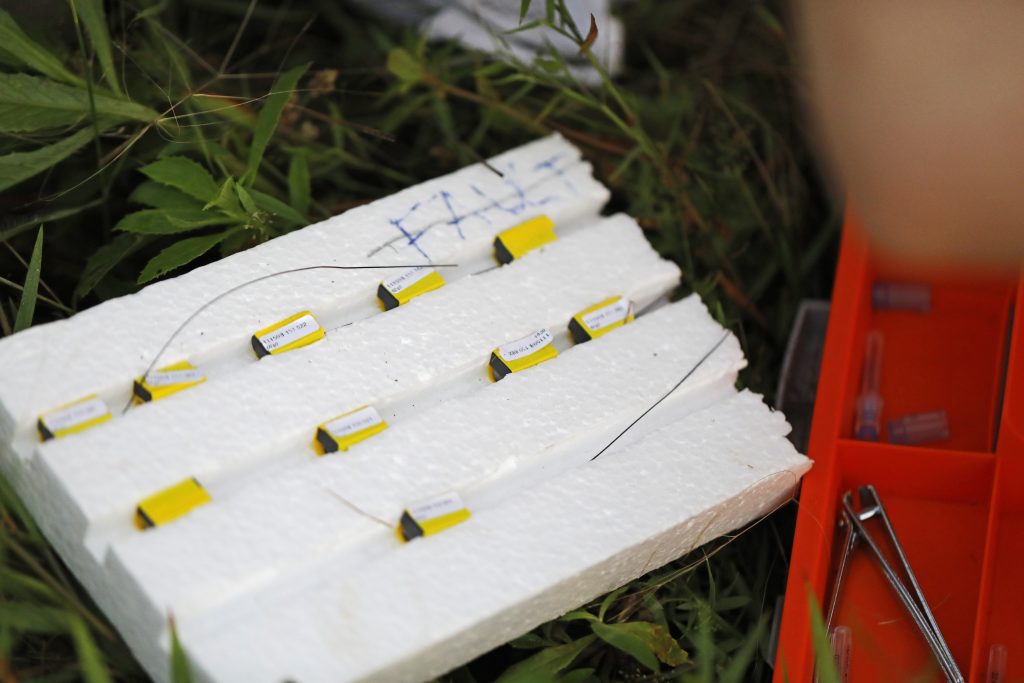
Starting in the 1950s, radio telemetry has been a valuable tool for wildlife researchers to monitor movements of an animal tagged with a transmitter device. The earliest forms of radio transmitters were heavy and could only be used on big game species (i.e., deer, elk). Miniaturization of transmitters and batteries have enabled the development of lightweight hardware for applying to wild turkeys – even radio tags small enough to attach to a 1-day old turkey poult.
“Our on-going research in Oklahoma involves leveraging technology to learn more about the brooding process,” Chitwood said. “We are collecting fine-scale information about poult resource selection, space use and movements during this critical life stage. This is especially important in areas seeing steep declines like Southeastern Oklahoma.”
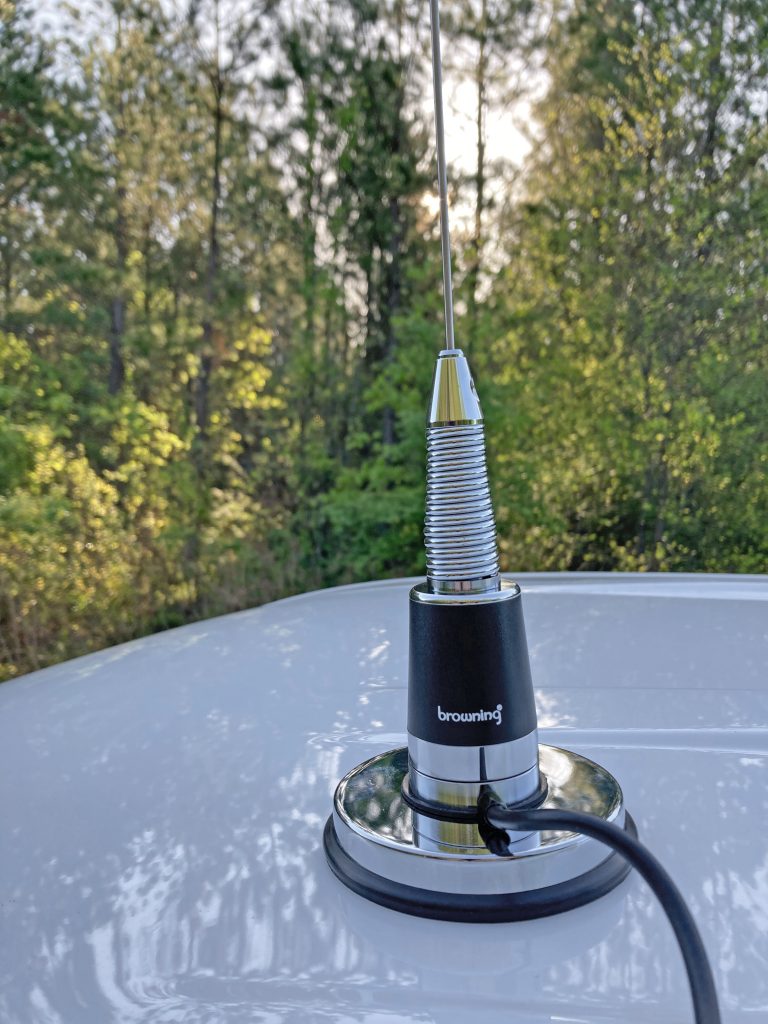
The suture-style transmitters weigh less than 1 gram and have a battery life of approximately 60 days. A researcher locates the brood by following the tagged hen’s frequency using Very-High Frequency (VHF) telemetry. Once close enough, the researcher listens to the individual poult frequencies to determine if they are present. As the poults grow, the sutures eventually pop, and the transmitters fall off.
A Bright Future
With more wild turkey research happening right now across the country than in any other time in history, NWTF is committed to supporting innovative research practices using advanced technologies that offer valuable insights into wild turkey biology and natural history which contributes to informed management decisions and targeted strategies.
Tracking Turkeys in Minnesota
The NWTF is helping fund a new and innovative wild turkey study conducted by the University of North Texas in collaboration with the Minnesota Department of Natural Resources and Three Rivers Park District in east-central Minnesota.
The idea for this cross-state collaboration came from critically thinking about why turkey populations are seemingly doing very well in some areas of Minnesota and are struggling in other regions. If researchers find healthy wild turkey populations in Minnesota, then collaborators will look at the possibility of translocating birds to bottomlands in the southeast, where populations are in decline. Investigators will also be leveraging existing funding to investigate disease ecology of wild turkey across this landscape.
To estimate regional population size, researchers plan to use unmanned aerial vehicle (UAV) surveys with infrared thermal imaging that can conduct roost and poult surveys with the corresponding date and time. This thermal imaging will help with detecting poults hidden under dense herbaceous cover. The research team is also planning to trap and tag female wild turkeys within the Three Rivers Park District with Apple AirTags to measure home range utilization, nest placement, poult recruitment and adult survival. Using AirTags offers a low-cost alternative to using VHF transmitter units, which will allow the lab to mark and track 120 birds per year for two years at an affordable cost.