Tips for Locating Turkeys Before Spring Hunting Season
Locating wild turkeys before spring hunting season is one of the most important steps in preparing for opening day. Whether you’re trying to find birds in your home area for the first time or scouting a new hunting spot, pre-season scouting gives you a major advantage. The more you understand turkey behavior and patterns ahead of time, the better your chance of success when the season opens.
Begin scouting several weeks before the season opens and refine your plan as you learn more about turkey habits and movements. Early scouting lets you identify key areas and gives you multiple opportunities to understand the birds you aim to hunt, rather than guessing come opening day. Time spent in the woods scouting will give you a leg up for a successful season. Here are a few tips to help you prepare for opening morning.
Map and Terrain Awareness
Topographical maps and knowledge of cover types help you predict where turkeys may live and move. Birds often use specific terrain features that offer good feeding, shelter, and travel opportunities. E-scouting tools like HuntStand and OnX can help you locate these areas before you start your on-the-ground scouting.
Look for:
- Ridges and benches
- Bottomlands and river corridors
- Edge habitat and funnels
- Open field corners near woods
These terrain features help you visualize the landscape from the turkey’s perspective — and plan scouting and hunting routes accordingly.
Look for Turkey Sign
As you hike or drive through potential turkey country, pay attention to sign that birds are using a location, such as:
- Tracks — Turkey tracks are large with three forward toes and a long middle toe.
- Scat — Fresh droppings, often found near feeding areas or under roosts.
- Feathers — Molted feathers under trees or in fields can indicate frequent use.
- Scratches — Scratching in leaf litter or loose dirt shows feeding activity.
- Dusting Areas — Shallow depressions in dry soil where turkeys bathe to keep feathers clean.
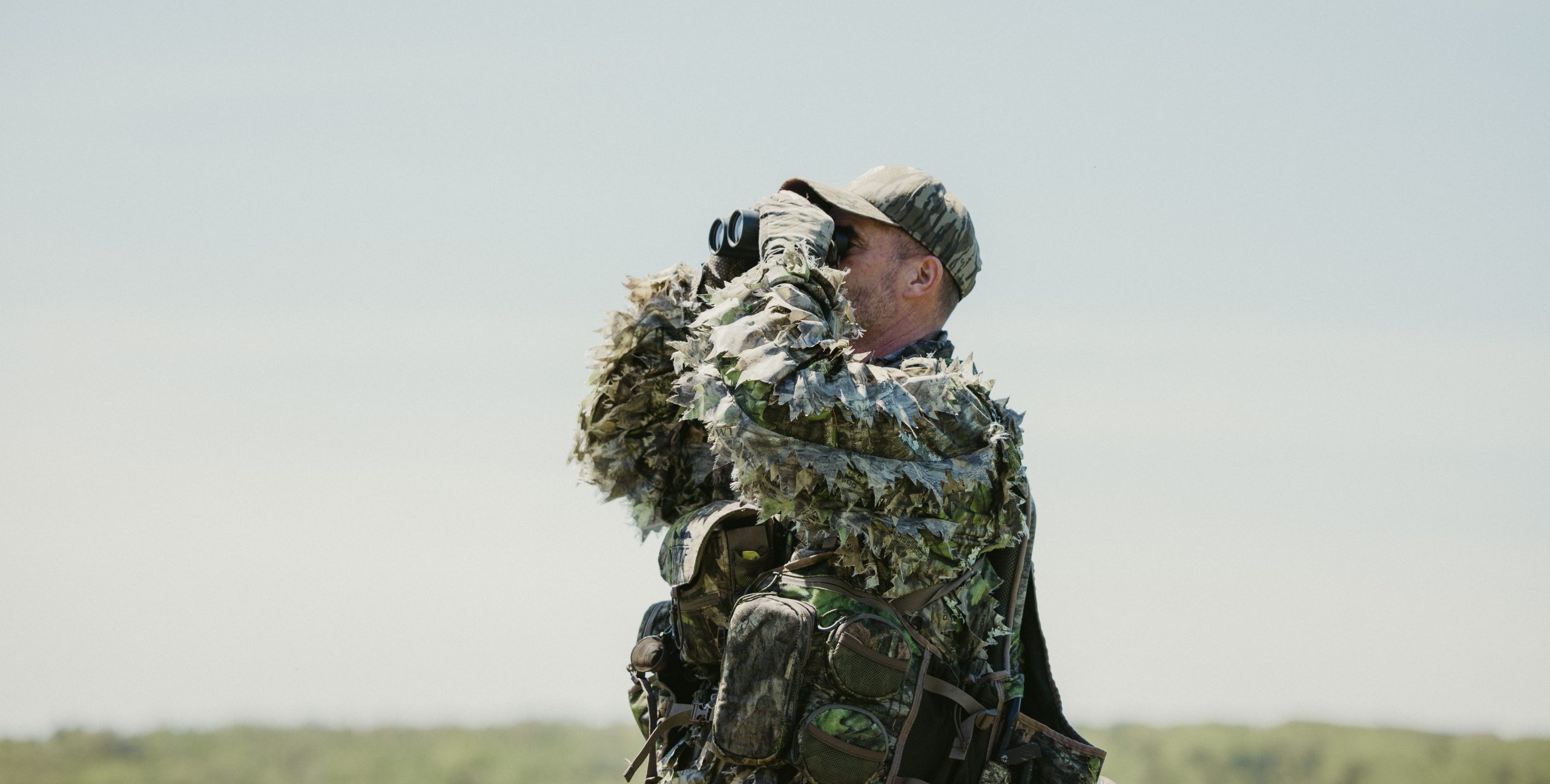
Using binoculars while scouting helps you spot birds from a distance without spooking them. Slow, methodical walks through promising terrain can also be more effective than just driving around.
Locate Roost Trees and Roost Areas
Turkeys roost in trees each night to stay safe from predators. Identifying these roost sites is one of the most valuable pieces of pre-season intel you can gather. Birds often return to the same general roost area from day to day.
Tips for finding roosts:
- Scout at dawn and dusk. Turkeys gobble more before flying down in the morning and after flying up in the evening.
- Look for mature trees near water, open spots, or edges, as these areas are often preferred.
- Stay at a distance with binoculars to watch birds fly up or down without disturbing them.
Identify Feeding Areas
Turkeys spend much of their day feeding, so finding where they regularly eat helps you anticipate where they’ll be at different times of day.
Common feeding spots include:
- Agricultural fields with green shoots or recently planted crops.
- Fallow fields and meadows where insects and vegetation are abundant.
- Hardwoods with heavy scratching showing where birds are digging for food.
Driving backroads mid-morning or using a high vantage point to glass fields can help you see birds feeding before the season starts.
Find Turkey Travel Routes
Once you’ve located roosts and feeding areas, the routes birds use to travel between them become critical. Turkeys tend to follow the path of least resistance, which usually means clearly defined corridors.
Look for travel routes such as:
- Deer trails and old logging roads
- Ridgetops and saddles
- Oak flats and edge habitats
- River bottoms and creek banks
- Funnels and pinch points between cover types
These travel lanes often show heavy tracks and can be excellent places to set up when the season opens.
Listen to the Woods
Turkeys are vocal in early spring, especially toms that gobble to establish territory and locate hens. Being quiet and listening is one of the most effective ways to locate birds.
Listening strategy:
- Get in the woods 30–60 minutes before first light to hear gobbles from roost trees.
- Position yourself in quiet areas (hilltops, edges away from roads or running water).
- A locator call like a crow or owl hoot can trigger a “shock gobble” from nearby toms. Avoid using and educating birds on turkey calls before the season begins.
Put It All Together
Scouting isn’t a one-time task; it’s an ongoing process. Before the season:
- Scout early and often
- Record sign and locations with notes or e-scouting tools
- Pattern birds' behavior by combining sign, sound, and terrain features
- Refine your findings as season nears
By investing time in pre-season scouting, you’ll head into spring turkey season confident and well prepared to capitalize on what turkeys are doing — not guessing where they might be.