West Region Update: Conservation at the Scale of the Landscape
The West is home to some of the most vast and diverse landscapes in the country. From rugged mountain ranges and sagebrush steppe to deserts, forests and coastal ecosystems, the region supports an incredible variety of wildlife and provides unmatched opportunities for hunting, fishing and outdoor recreation.
Much of that opportunity exists on public lands, where healthy forests, watersheds and wildlife habitat are shared by millions of people. But maintaining those landscapes comes with equally significant challenges.
Rapidly growing communities are changing land-use patterns and putting new pressure on open space and public access. Catastrophic wildfire threatens forests, watersheds, wildlife habitat and communities. In many places, forests have become overcrowded and expensive to treat, particularly where steep terrain, limited infrastructure and low-value timber make restoration challenging. These challenges are too large for any one organization to tackle alone.
Across the West, the National Wild Turkey Federation is working through shared stewardship, bringing together federal and state agencies, conservation organizations, local communities, private landowners, volunteers and hunters to increase the pace and scale of conservation. The USDA Forest Service remains one of NWTF’s largest partners, but the strength of this work comes from the broader network of partners combining resources, expertise and shared priorities.
The result is conservation that reaches far beyond wild turkeys.
Active Forest Management
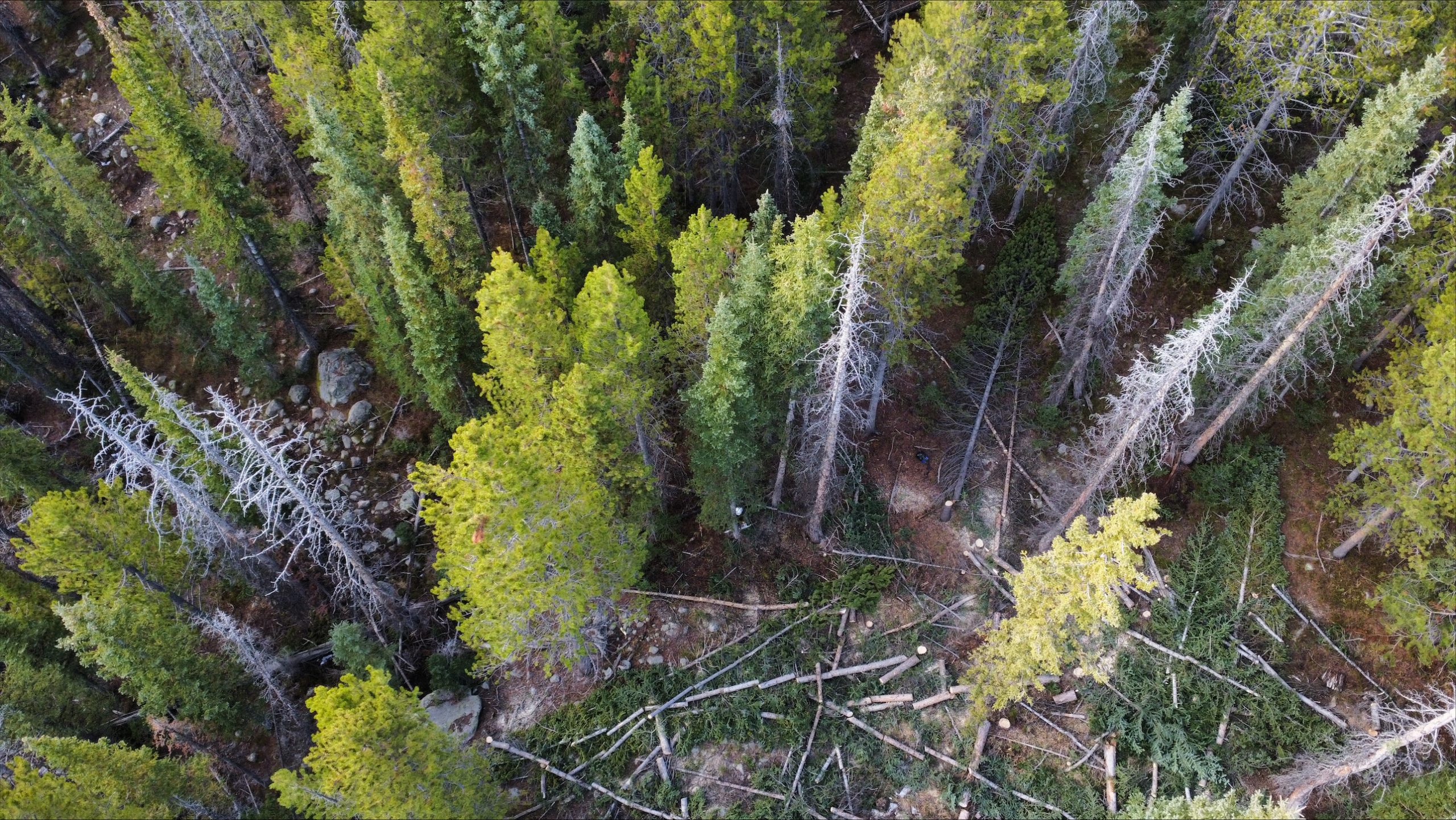
Across the West, wildfires are burning more forested acres each year than are being treated through active forest management and restoration, underscoring the need to accelerate the pace and scale of this work. But the number of acres burned tells only part of the story. Fire is a natural and necessary part of many Western ecosystems, yet increasingly severe wildfires can fundamentally alter forests and their ability to regenerate. In some cases, severely burned areas may transition to grasslands or other habitat types rather than returning to forest. This potential loss and conversion of forest habitat is an increasing concern for wildlife managers across the West.
The National Wild Turkey Federation is working alongside the Forest Service and other partners to increase the pace and scale of this work, improving forest health, wildlife habitat and community resilience. In 2022, the National Wild Turkey Federation and the Forest Service entered into a 20-year national master stewardship agreement, creating new opportunities to collaborate on addressing increasing catastrophic wildfires in the West and advancing forest health. Since then, six agreements and a total of 29 projects have been launched under this framework, driving progress toward healthier forests and wildlife habitats and more resilient communities nationwide.
Rocky Mountain Restoration Initiative
Another example of NWTF’s involvement in shared stewardship is through the Rocky Mountain Restoration Initiative (RMRI) in Colorado. Co-convened by NWTF and the Forest Service, RMRI was launched in 2019 as a pilot for putting shared stewardship into practice at the landscape scale. Rather than focusing on a single property or jurisdiction, the initiative brings more than 40 partners together to coordinate restoration across public and private lands across three landscapes: Southwest, Upper Arkansas and Upper South Platte. In addition, RMRI leads three statewide subcommittees: social license/communications, biomass utilization and workforce capacity.
The initiative is demonstrating what is possible when partners align their priorities and resources. In 2026, RMRI partners treated 23,744 acres of forest across Colorado’s priority landscapes, advancing forest health, reducing wildfire risk, protecting water resources and strengthening communities. Cumulatively, NWTF and partners have now treated 155,297 acres through RMRI.
Conservation at Work Across the West
In fiscal year 2026, NWTF-supported projects across the Western region improved habitat, strengthened forests, restored watersheds, advanced wild turkey science and helped keep public lands healthy and accessible. Through these efforts, 133,879.88 acres were impacted across the region. Here is a snapshot of that work state-by-state:
Arizona – 195 Acres Impacted
One example of that work is the General Springs Restoration Project on the Coconino National Forest. The project is using timber harvest and mechanical timber stand improvement to restore forest health and improve early successional habitat across 638 acres.
Arizona is also home to ongoing wild turkey research and translocation efforts. In 2026, approximately 25 Merriam's wild turkeys were moved from eastern to central Arizona, with some birds outfitted with GPS transmitters to help researchers better understand survival, movement, nesting behavior and habitat use. Together, these efforts are helping address both habitat needs and the long-term future of wild turkeys in the state.
The Arizona Chapter provided $11,000 in support of wild turkey research and management in the state. This included $6,500 to cover data upload, airtime and storage fees for GPS units deployed on wild turkeys across Arizona, along with $4,500 to purchase 200 turkey transportation boxes and 50 disposable inserts for the Arizona Game and Fish Department to support future capture and translocation efforts.
California – 1,607.75 Acres Impacted
In California, much of NWTF's conservation work centers around improving forest health and reducing wildfire risk in the Sierra Nevada mountain range.
The Cleveland-Icehouse Stewardship Project is one example. A multi-phase partnership with the El Dorado National Forest has addressed dense vegetation and hazardous fuels through thinning, mastication, biomass removal and road improvements. The work is occurring around Icehouse and Union Valley reservoirs, where healthy forests are important not only for wild turkeys and other wildlife, but also for clean water, recreation and public access.
Colorado – 28,717.75 Acres Impacted
Partners recently completed the first phase of restoration at the West Rifle Creek State Wildlife Area. Crews installed 39 low-tech structures along nearly a mile of stream to slow water, capture sediment and reconnect the creek with its floodplain.
The restored riparian habitat will benefit wild turkeys as well as mule deer, beavers, northern leopard frogs and numerous other species. It also demonstrates how improving water resources can build resilience across an otherwise dry Western landscape.
Additionally, various projects on the San Juan National Forest are improving habitat and access. NWTF wrapped up the First Notch project outside of Pagosa, which included thinning of ponderosa pine to encourage grasses and shrubs, while also starting and completing the Cottonwood Road project. This project included 7 miles of road reconstruction to ensure proper drainage and reduce soil erosion, while also widening the road to provide safer passage for forest visitors.
Idaho – 737.88 Acres Impacted
At Idaho's Boise River Wildlife Management Area, conservation is focused on helping a landscape recover from wildfire. The 2024 Valley Fire burned nearly 10,000 acres of the WMA, including important winter range for mule deer and habitat used by more than 300 species. NWTF and Idaho Fish and Game are working together to restore portions of the fire-scarred landscape by planting ponderosa pine.
On some of the site's steep, dry slopes, the project is using Waterboxx technology to help young trees survive. The approach combines hands-on restoration with innovative techniques to give native vegetation a better chance to become established.
The Deer Point project on the Boise National Forest continued to make progress this year, treating additional acres through commercial timber harvest and non-commercial hazard tree removal and thinning.
Montana – 2,343.25 Acres Impacted
Montana conservation work in FY26 included projects across several landscapes, including the 20 Mile Project, West Central, Upper Moose Creek, Line Creek and Flint Creek Phase 3.
At Upper Moose Creek, restoration efforts are using beaver-based and low-tech restoration approaches to improve stream function, reconnect riparian areas and create healthier habitat for wildlife.
Together, these projects demonstrate how targeted work can address forest, water and wildlife needs across different Montana landscapes.
Additionally, the 15-Elk project on the Ashland Ranger District of the Custer-Gallatin National Forest continued making progress this year, treating an additional 779.25 acres. This project is providing critical volume to mills and is reducing tree density and the risk of catastrophic wildfire.
New Mexico – 943.5 Acres Impacted
In New Mexico’s Zuni Mountains, forest restoration is also helping put a valuable resource back into the hands of local communities.
Through the Zuni Mountain Stewardship Project, NWTF and the Forest Service are thinning overgrown forests and reducing hazardous fuels to improve wildlife habitat and reduce wildfire risk. But the work also tackles a common challenge in Western forest restoration: finding a use for small-diameter trees with little commercial value.
Through the Wood for Life program, that material can become firewood for Indigenous communities. In one recent effort, the project supplied 250 loads of wood to the Navajo Nation for distribution through community wood banks. It’s a tangible example of how restoring forests can benefit wildlife, reduce fire risk and support people — all on the same landscape.
Since its inception in 2010, the project has treated a cumulative total of 16,984.6 acres.
Oregon – 1,716 Acres Impacted
In Oregon, NWTF and its partners are restoring one of the West's most important wildlife habitat types: aspen stands.
The recently completed Indian Prairie Project restored 43 acres by removing competing conifers and improving growing conditions for existing aspen stands. The work builds on previous restoration nearby and was supported by a partnership between the Oregon NWTF State Chapter, Rocky Mountain Elk Foundation and Oregon Hunters Association.
Farther east, the Damon Aspen Restoration Project completed the restoration of more than 153 acres across 35 aspen stands in the Blue Mountains. Together, these projects demonstrate how targeted habitat work can improve conditions for wild turkeys and a wide variety of other wildlife.
The other critical work getting done in Oregon is fire rehabilitation work on the Umpqua. Impacted by several large wildfires in 2020 and 2021, the Umpqua Disaster Recovery project entails removing large and dangerous hazard trees along roadways to protect visitors and reduce fuels. This year, a combination of 1,474 acres were treated across two different phases of the project.
Utah – 88,717 Acres Impacted
Much of NWTF’s conservation work in Utah happens under the umbrella of the state’s Watershed Restoration Initiative, a collaborative effort that brings sportsmen’s groups, state and federal agencies and other partners together to improve high-priority watersheds across the state. NWTF has partnered with WRI since its inception in 2006, helping leverage funding for projects that benefit wildlife, water, forests and recreation.
The recently completed Upper Provo Watershed Project is one example of that work. The project used brush mowing, thinning and timber stand improvement to improve forest health, reduce hazardous fuels and create more diverse habitat for wild turkeys and other wildlife. It’s one of many projects demonstrating how partnerships can turn shared conservation priorities into landscape-scale results.
Utah NWTF also funded a DOT-approved fuel transport trailer for the Utah Forestry Fire and State Lands to support prescribed fire operations by providing the fuel and equipment needed for aerial ignition, helping crews safely and efficiently treat larger landscapes. Year to date, approximately 14,500 acres have been treated across multiple forests throughout Utah.
Washington – 230.75 Acres Impacted
In Washington, sometimes conservation starts with putting a tree in the ground.
Near Albion in the Palouse, NWTF volunteers planted nearly 4,000 trees and shrubs across approximately 2.5 acres as part of the Smoot Hill Project. Developed by the Washington Department of Fish and Wildlife and supported through the Washington NWTF Super Fund, the project is helping reconnect fragmented habitat in a landscape where agriculture dominates and quality turkey habitat can be limited.
Ponderosa pine, hawthorn, elderberry, chokecherry and cottonwood will provide future roosting, nesting, forage and travel habitat, demonstrating how relatively small projects can have an important impact when strategically placed on the landscape.
Wyoming – 8,671 Acres Impacted
In Wyoming’s Bearlodge Mountains, NWTF and its partners worked across three watersheds to improve riparian health and restore the ecological processes that sustain these systems. The Bearlodge Riparian Restoration Project included low-tech process-based restoration structures, aspen and meadow restoration, livestock management, noxious weed control and riparian vegetation planting, with the long-term goal of supporting the return of beavers to help maintain healthy riparian ecosystems.
Wyoming also expanded opportunities for sportsmen through 8,400 acres of access secured through the state’s Access Yes program.
Policy and Access
Conservation in the West does not happen only on the ground. It also happens at state capitols, through email alerts and outreach to our members. NWTF is actively influencing the policies that determine how wildlife is managed, how people access public lands and whether future generations will have opportunities to hunt and fish. That work was especially visible in Colorado and Oregon in 2026.
In Colorado, voters will decide this November whether to add a constitutional right to hunt and fish to the state constitution. Amendment 83 would establish a right to hunt, fish and harvest fish and wildlife using traditional methods while recognizing hunting and fishing as preferred means of responsibly managing wildlife populations. The proposal preserves the authority of Colorado Parks and Wildlife and the General Assembly to regulate hunting, fishing and wildlife management for sound scientific conservation, public safety and the future of hunting and fishing. NWTF supports the proposed amendment.
The measure reflects a broader conversation taking place across the West about the role of hunters and anglers in wildlife conservation and the importance of science-based management. Oregon presented a different policy challenge.
NWTF joined a broad coalition in opposing Initiative Petition 28, which sought to remove longstanding exemptions for lawful hunting, fishing, trapping and agricultural practices from Oregon’s animal cruelty statutes. The proposal would have criminalized hunting and fishing and dramatically changed how Oregon manages wildlife .
In July, Oregon elections officials determined IP28 did not receive enough valid signatures to qualify for the November ballot. The petition received 104,262 valid signatures, short of the 117,173 required.
The outcome was an important reminder that protecting hunting and fishing opportunities requires continued engagement. For NWTF and its partners, advocacy is part of conservation because the future of wildlife depends not only on healthy habitat, but also on the policies, funding and public access that allow people to participate in conservation.
Connected Through Conservation
The projects highlighted here represent only a snapshot of the work NWTF and its partners accomplished across the West in fiscal year 2026.
A restored stream in Colorado, a fire-recovery project in Idaho, an aspen stand in Oregon, forest restoration in Utah and wild turkey research in Arizona may look very different on the ground. But each addresses a piece of the larger challenge of maintaining healthy, resilient Western landscapes.
And none of that work happens alone.
From federal agencies and state wildlife departments to conservation organizations, private landowners, volunteers and hunters, partnerships make it possible to take on projects that would be difficult for any one organization to accomplish independently.
That collaborative approach will become increasingly important as NWTF builds its forthcoming Western Initiative, which will focus on the region's shared needs for healthy wildlife, forests, water, recreation and communities.
For NWTF, conservation in the West is ultimately about more than a single species, and even more than acres treated. It is about maintaining the landscapes that support wildlife, sustain communities, provide clean water, offer places to hunt and recreate, and preserve outdoor opportunities for generations to come.
Across the West, that work is already underway.